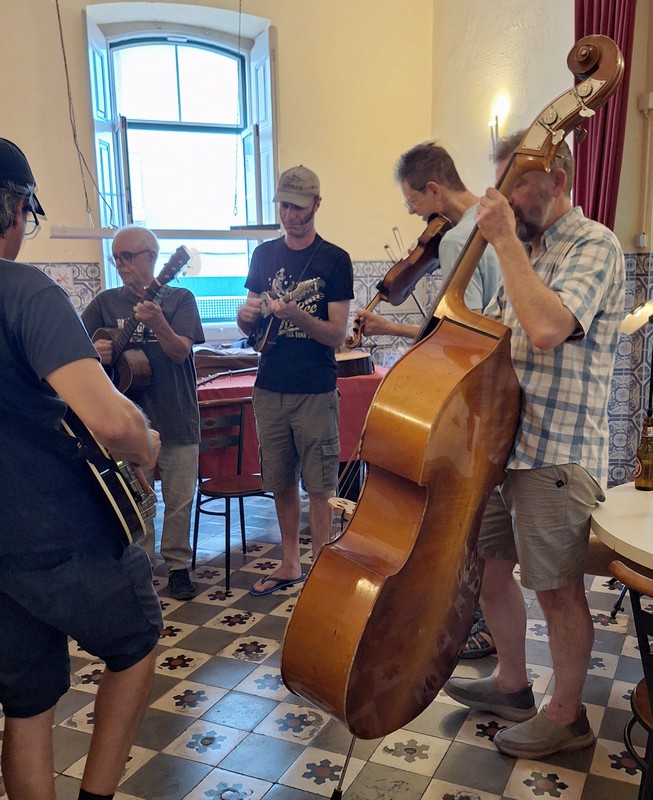
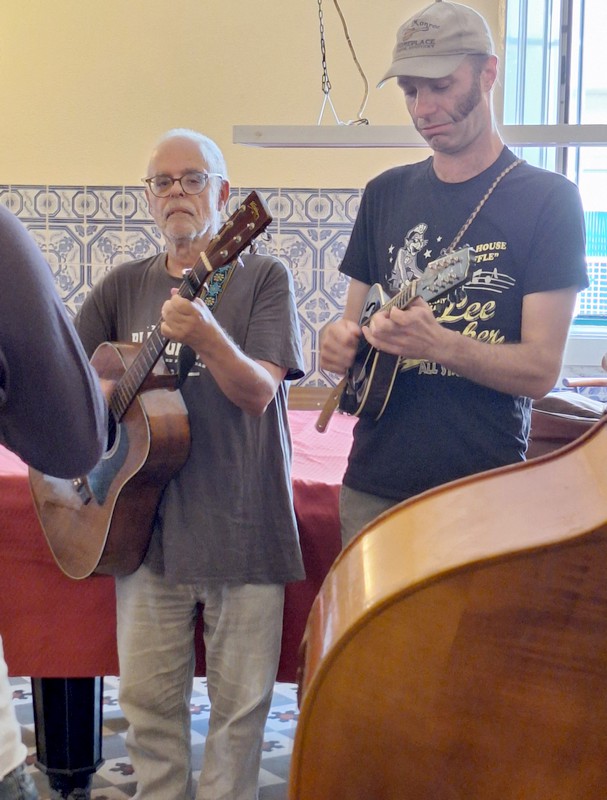
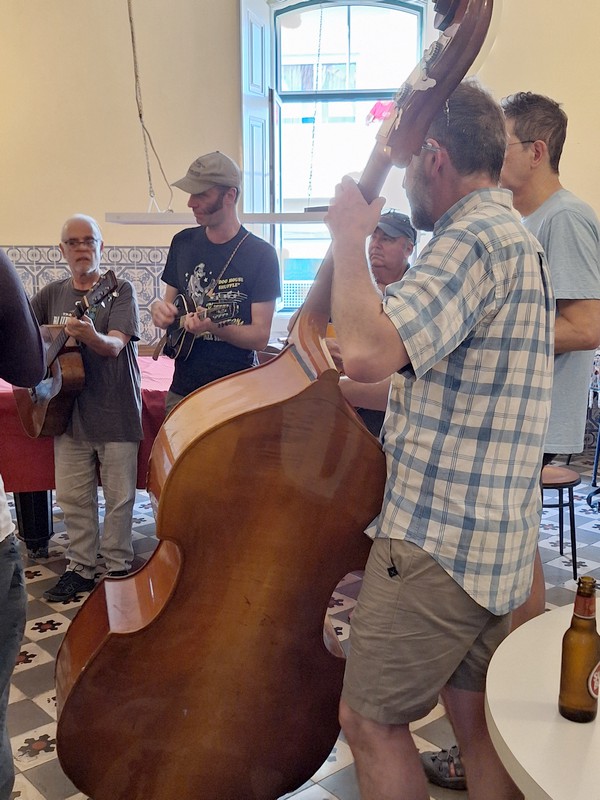
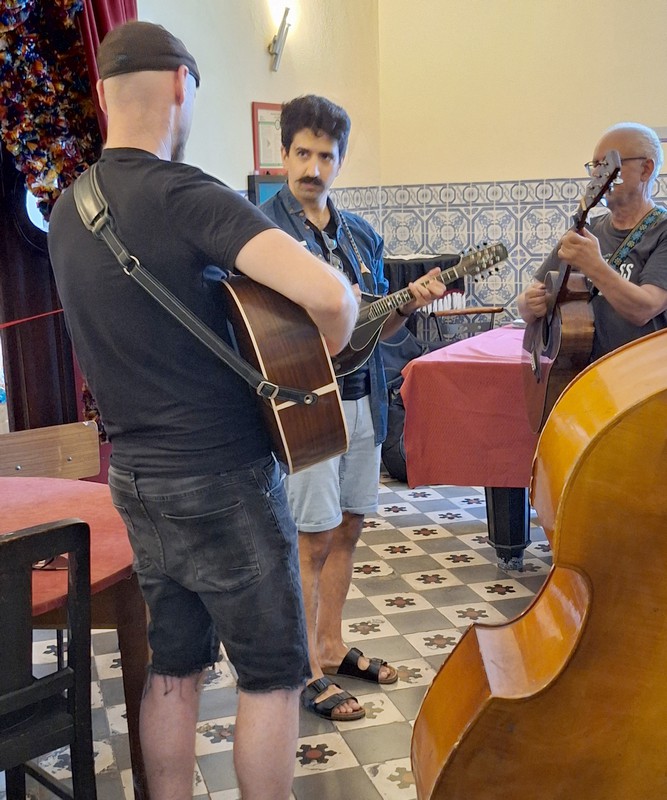
Last week-end, a Blue Grass Festival took place at Trafaria Casino (an ostentatious name for a nice local social club). A very welcoming ambience, free-entrance and several blue-grass bands from different countries. Many amateur musicians played together in small spontaneous groups, creating jam-sessions before and after the professional performances. A very relaxed atmosphere , a sense of togetherness and the good music made this a memorable event for me-
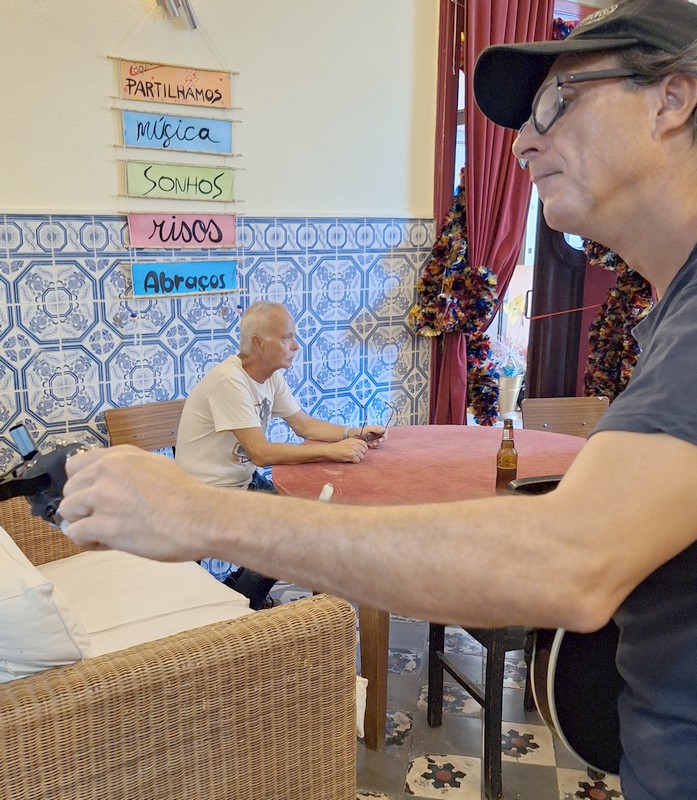
Tunning the guitar
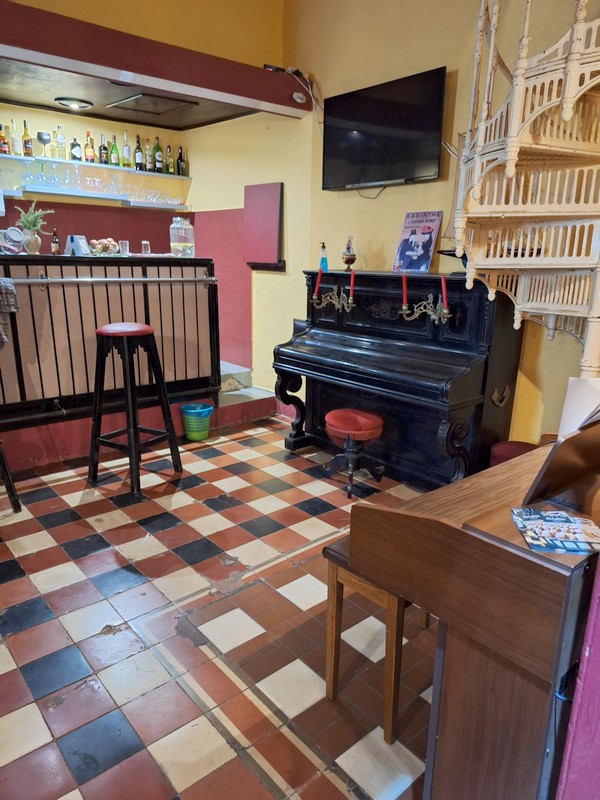
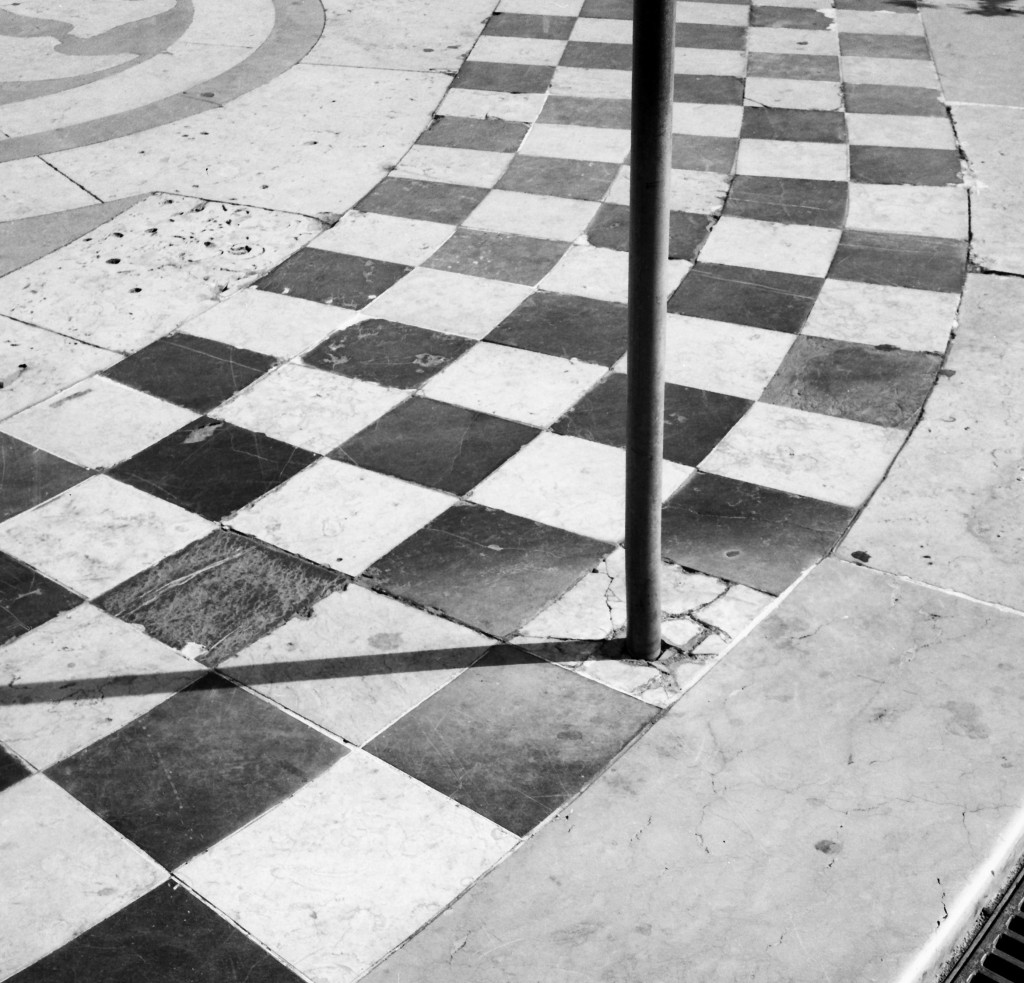
The Casino, a typical building from the early XX century. The tiled floor is precious !
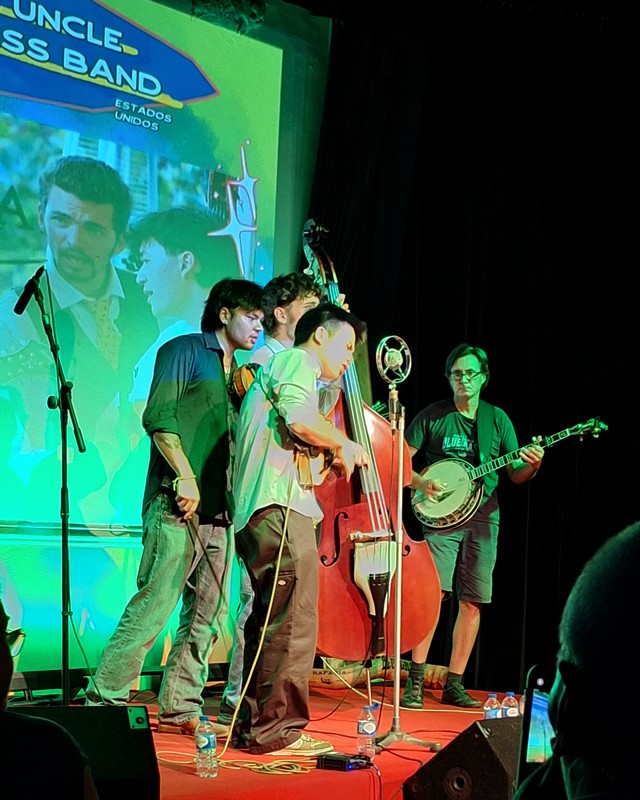
Some members of the Crying Uncle Blue-grass Band (USA) with an invited banjo performer
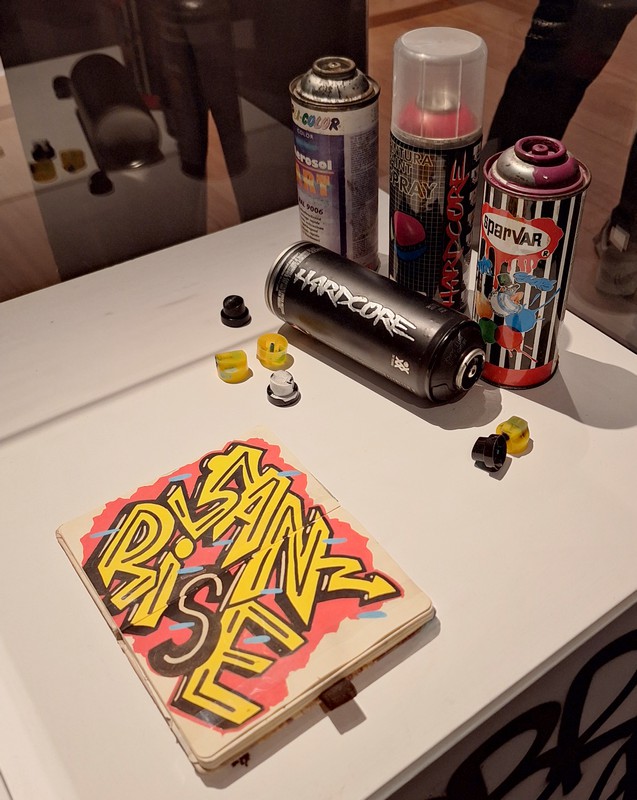
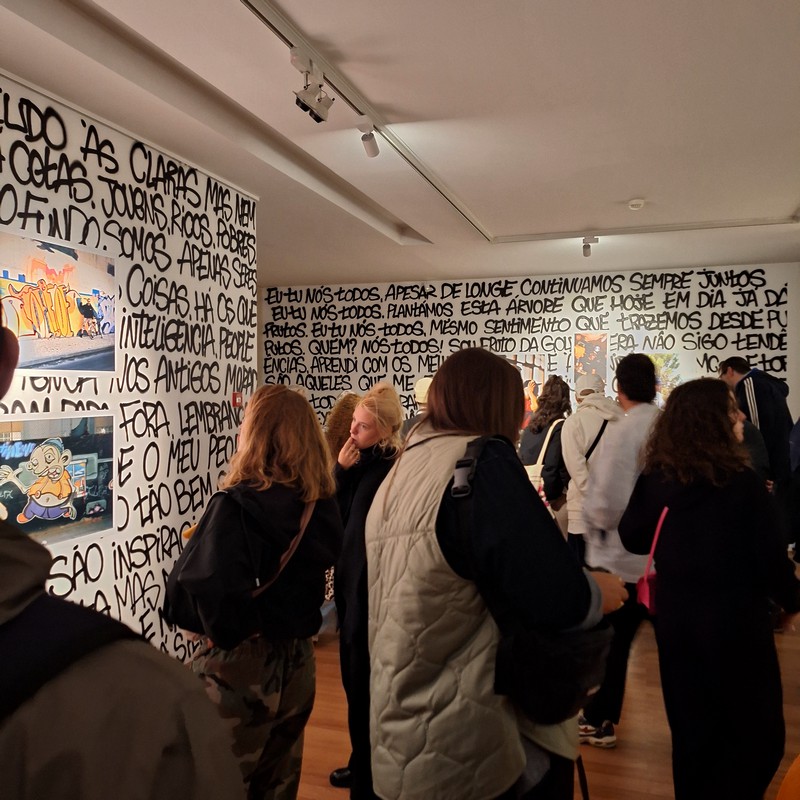
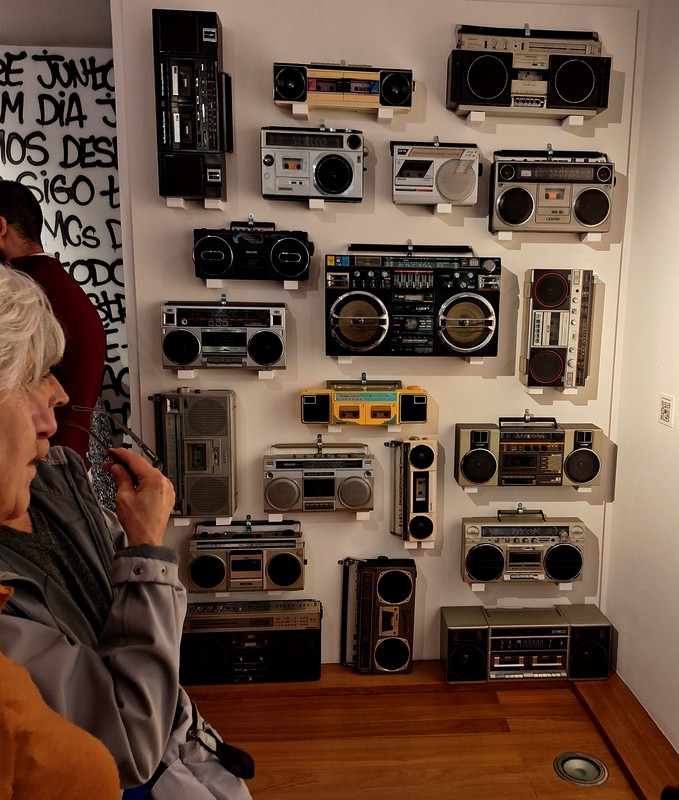
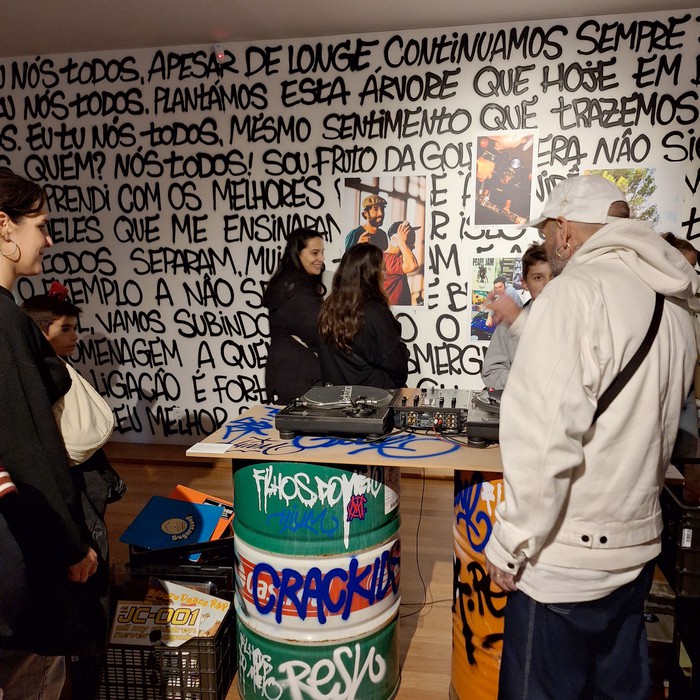
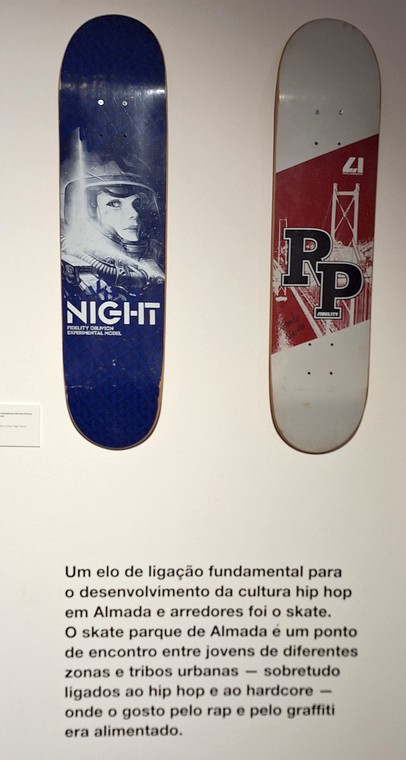
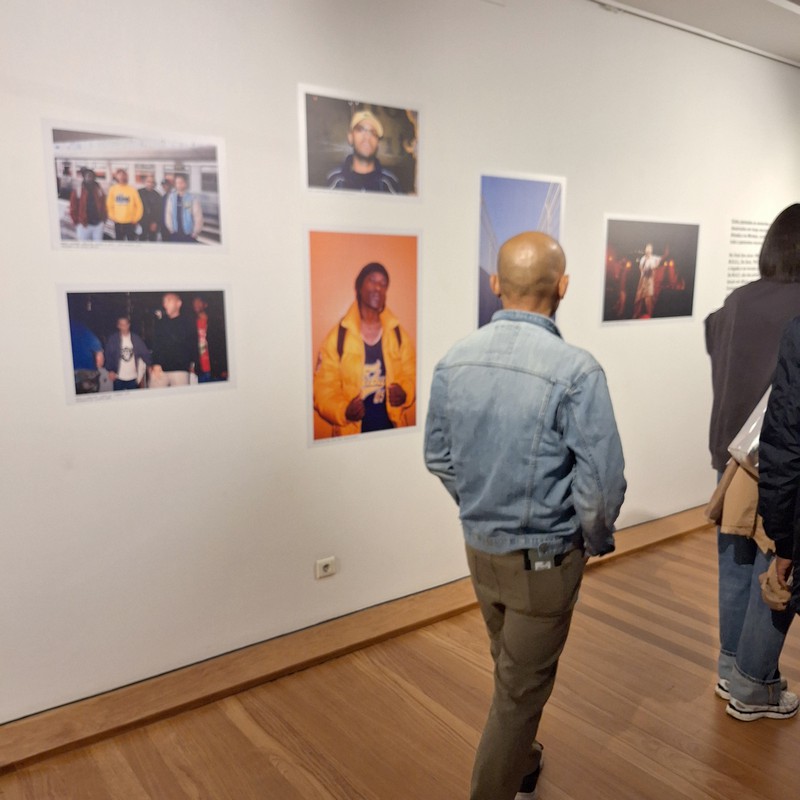
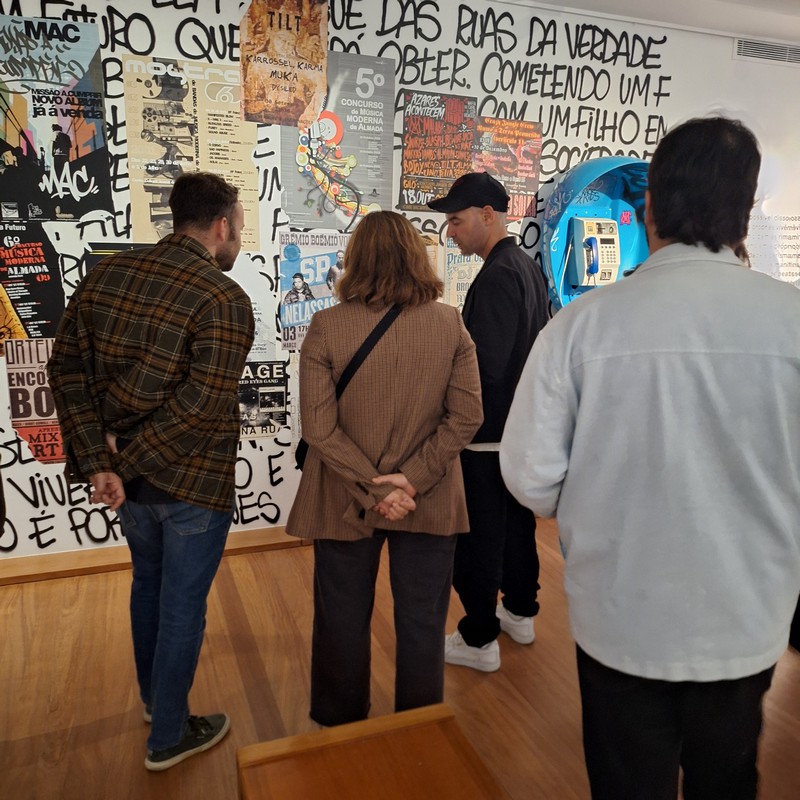
«Filhos do Meio – Hip Hop à Margem» is the new temporary exhibition at the Almada Museum – Casa da Cidade, scheduled to open on October 26th at 3:00 pm, and which will occupy the two floors of the temporary exhibition wing of Casa da Cidade until the end of March 2025.
The exhibition is part of the celebrations of the 50th anniversary of the 25th of April 1974 and also marks the 30th anniversary of the RAPublica collection, the first compilation of Portuguese rap, released in 1994. It aims to provide an interpretation of the identity of Almada, integrating the cultural movements fostered by the 1974 Revolution, stimulated by the arrival of new populations and their reproduction in the municipality of Almada, highlighting the contribution of the hip hop culture that was founded there and giving expression to geographical and cultural areas of the municipality that are less known to the general public. The guiding theme focuses on the post-25th of April because it is in these youthful dynamics fostered by the younger generations that the creative processes have been constructed over these 50 years, in a permanent exchange with similar territorial realities in spaces that cross Almada and the Costa da Caparica with the municipalities of the Setúbal peninsula and the Lisbon Metropolitan Area.
The exhibition includes sections dedicated to the history of hip hop in Portugal and Almada, with links to fashion, breakdancing and pirate radio stations; highlighting expressions such as graffiti and rap in Portuguese, associating them with television media coverage and ending with the current creative situation, framed in an independent record market, streaming and social networks. This exhibition of colour, light and sound presents hip hop as an integral part of youth expression, rooted in the outskirts of the city of Lisbon, inserting it into the national music scene, but, above all, highlighting its uniqueness from Almada, the most local thing that these “middle children” have brought to the national music scene since then.
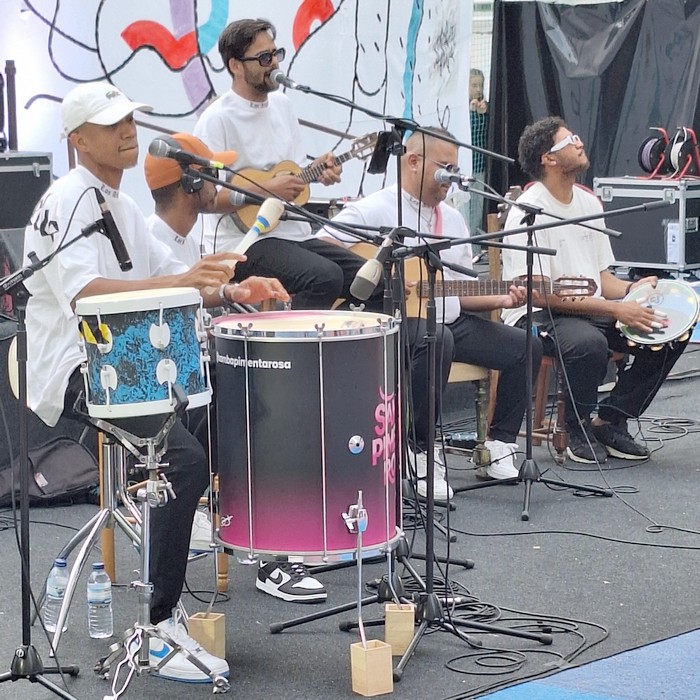
At the same time, Casa da Cidade will host a complementary programme, one Saturday a month, where music, dance and graffiti will be the main starting points for conversations and workshops dedicated to the central theme of this exhibition….”
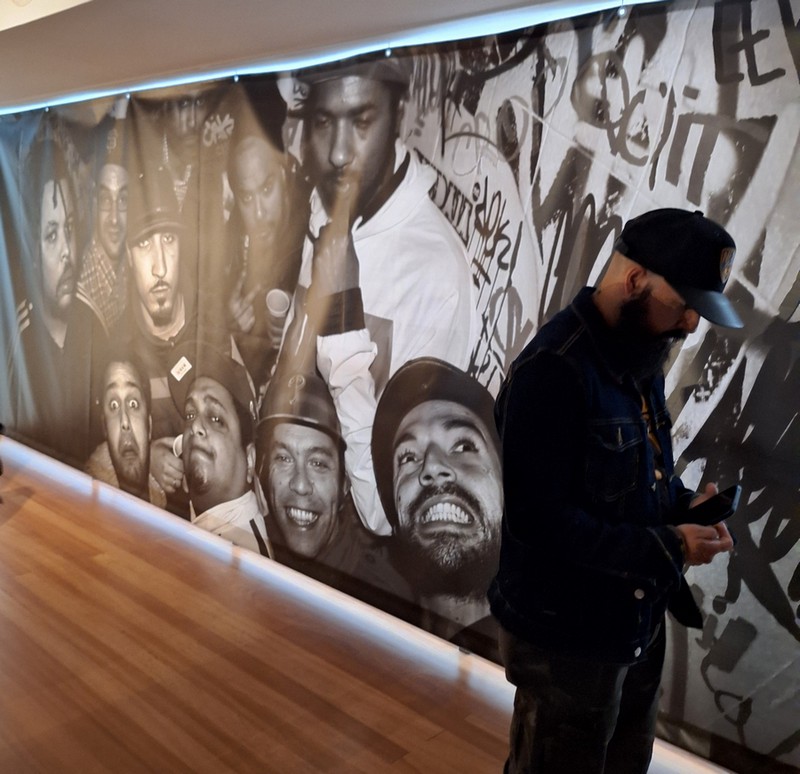
I visited the opening session yesterday, some snapshots below
“Contrasto” is an anual event in my neighbourhood.
It is promoted by an active group of neighbours, and promotes socializing through music (plenty of music) , small workshops, activities for children, art exhibitions, a market of home-made artisanal products, eating, drinking and dancing until 10pm.
There is an active participation of all the neighbours.
This year I had the idea of a “Get wings ! ” project.
I made two pairs of wings and hanged them. People could be photographed in front of those wings – instant photos were taken with a “mini-Instax camera” and the subjects collected them by the end of the day. Different results, this camera is quite tricky and very sensitive to light variations, but the idea was appreciated and the participation exceeded my expectations.
Saturday afternoon, South bank of the Tagus. People gather there to meet, eat and drink.
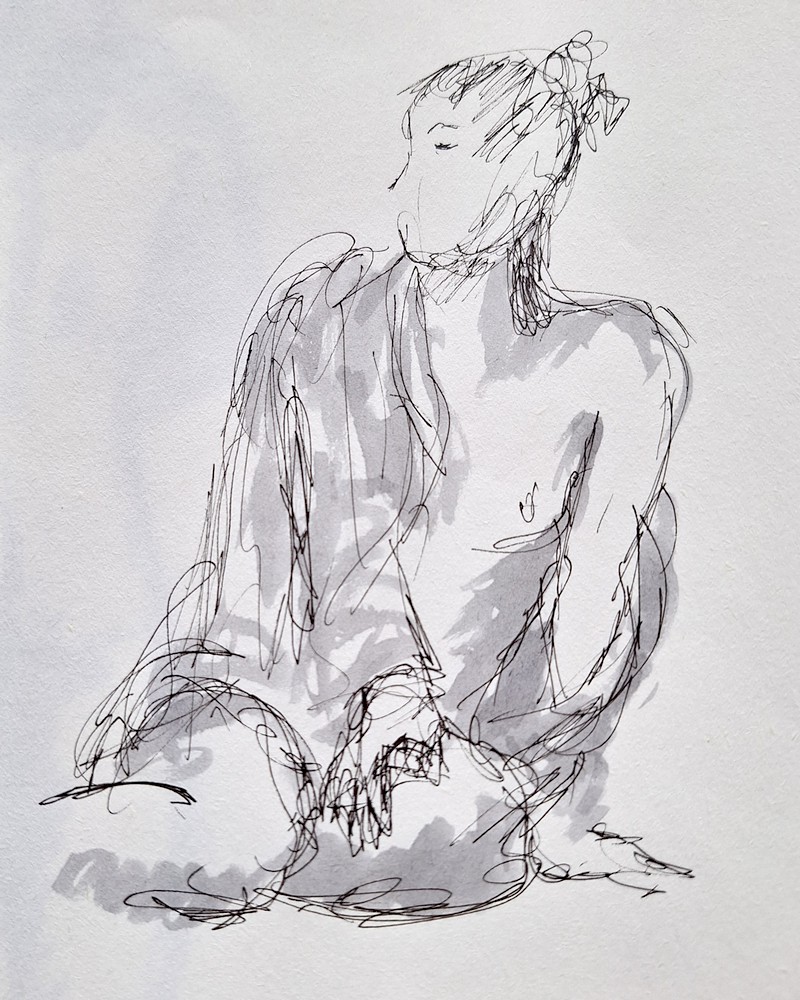
Some people prefer to be left alone. A moment of rest to settle ideas and feelings
Others choose to dance. A group of friends, or more probably an informal dancing class. They bring their own music and dance in pairs. One of them directs the others, giving instructions before each music sometimes correcting their movements. They seem to take this quite seriously – but they share and communicate a lot of joy.
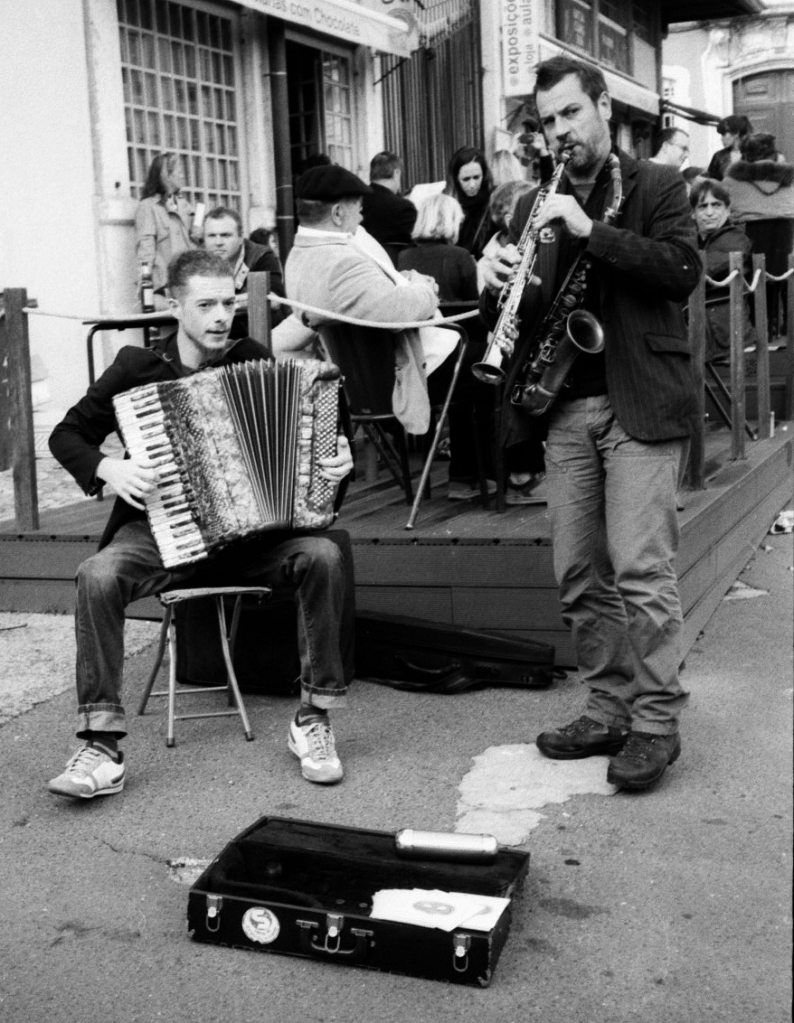
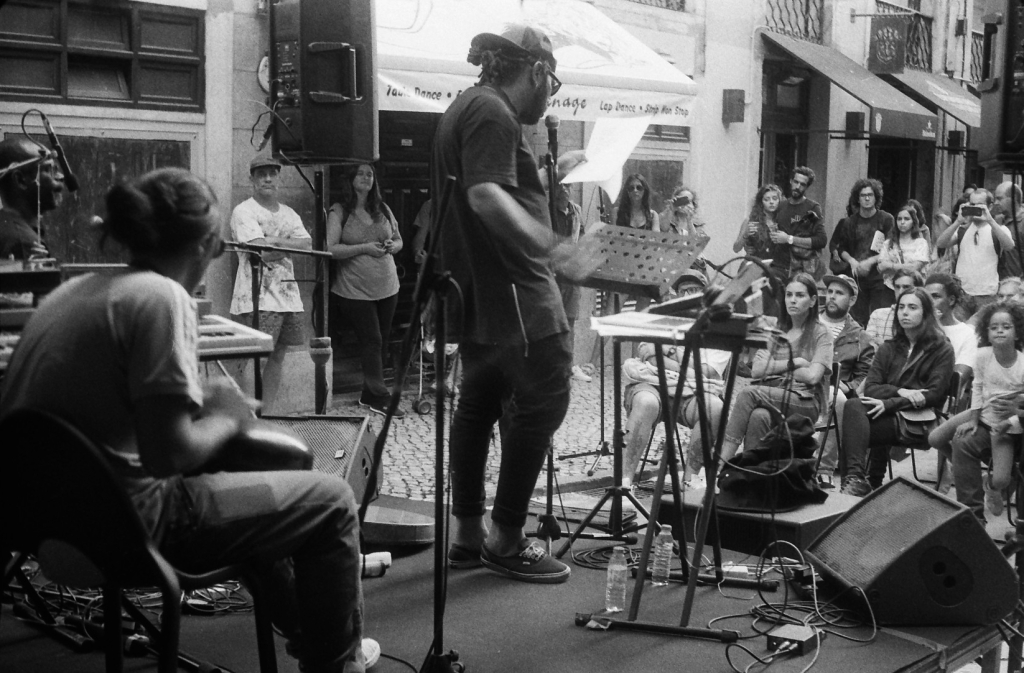
Some people make and play their own music…
… while others sit and talk, probably about the good old times
This week-end , the Vinyl Market at Campo de Santa Clara, Lisbon. Good chance to find some good old 12’ LP records – and many memories. I found a few records I did not knew, and many others I had forgotten. Bad photo (made with a re-loaded disposable plastic camera).
A few findings. The Jimi Hendrix Experience “Electric Ladyland” double LP (I had it forty years ago – someone stole it from me) and an album from Marianne Faithfull (I have a soft spot for her songs – she could have had a different life away from the shadow of Mick Jagger). Also a box with three LPs (Keith Jarret’s solo concerts in Bremen and in Lausanne). A fruitfull Saturday
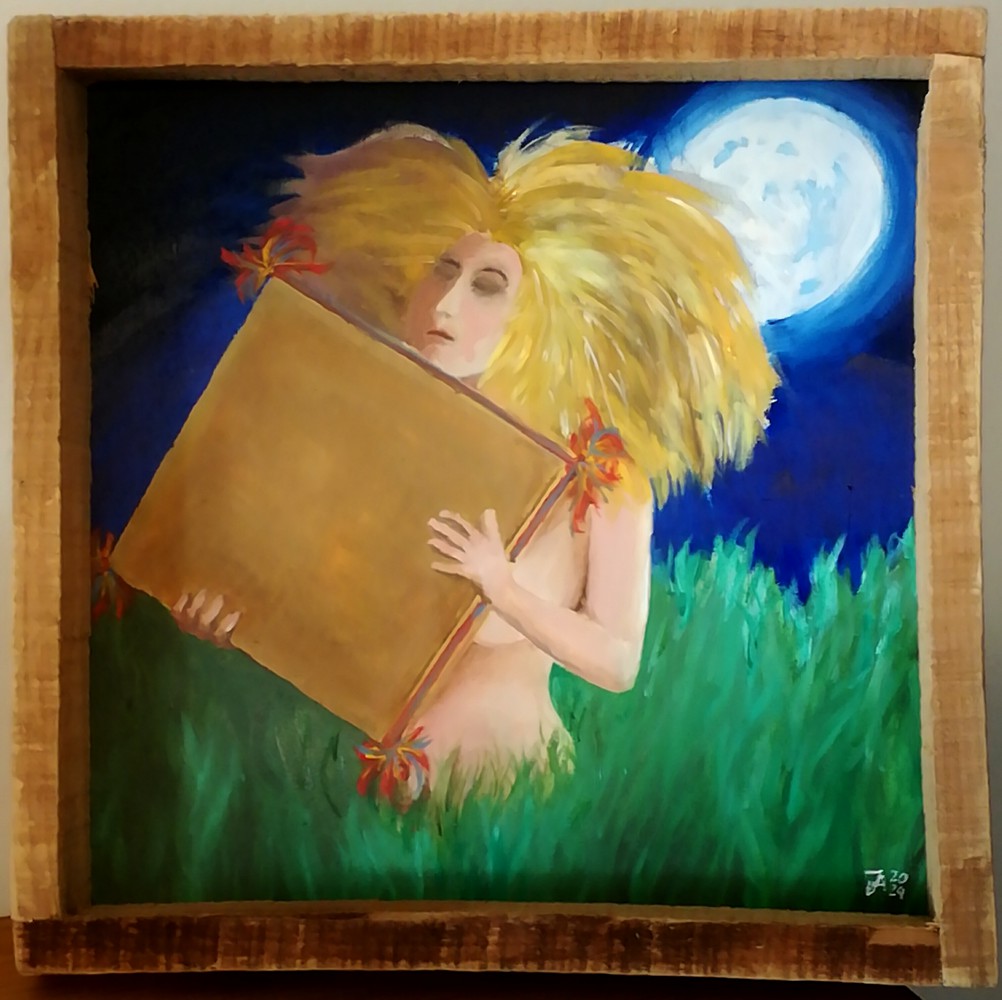
The Adufe is a square-shaped membranophone, introduced to Portugal by the Arabs in the 8th and 9th centuries. It has a square wooden structure and is covered on both sides with tanned goatskin. Traditionally one of the faces is that of a male animal, the other that of a female animal (some say it sounds better that way !). In the corners there are decorations with colored ribbons.
It is played in a vertical position and struck with the fingers and hands. Inside there are grains, seeds or small stones that make a rattling noise when shaking the Adufe. It is an instrument usually played by women (“adufeiras”) and has a strong presence in the interior of central Portugal.







 João Avelar images