Live model drawings… and fast cars

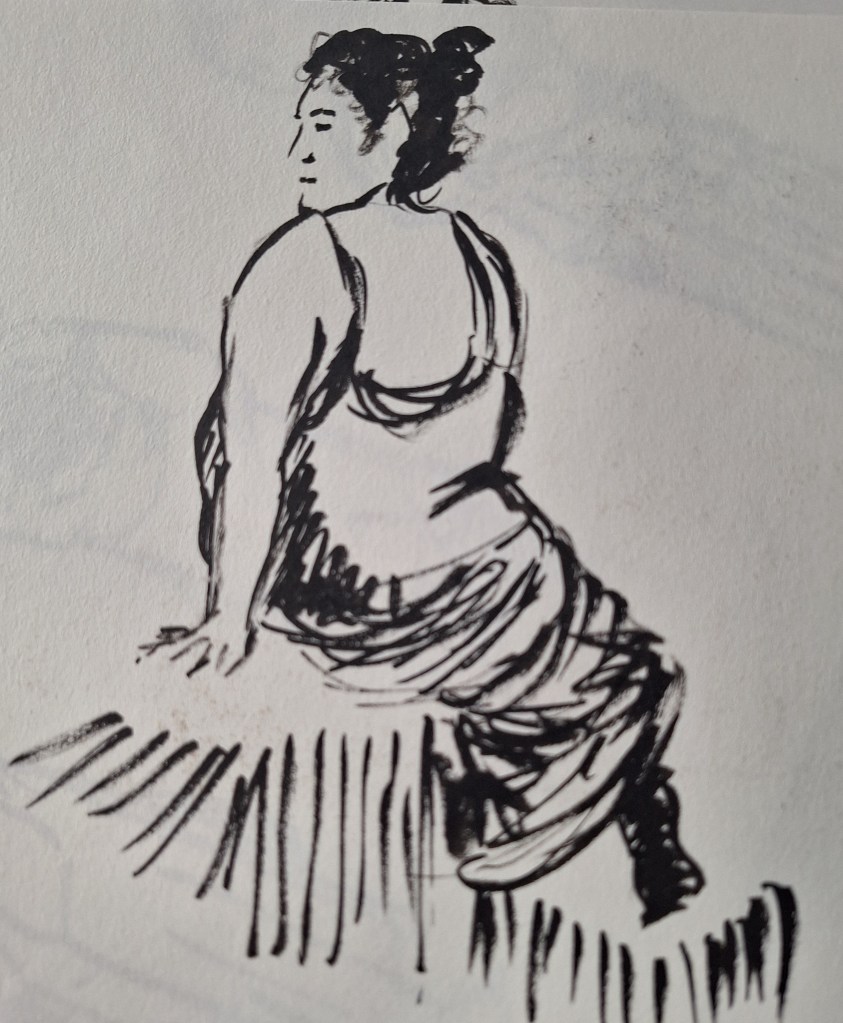
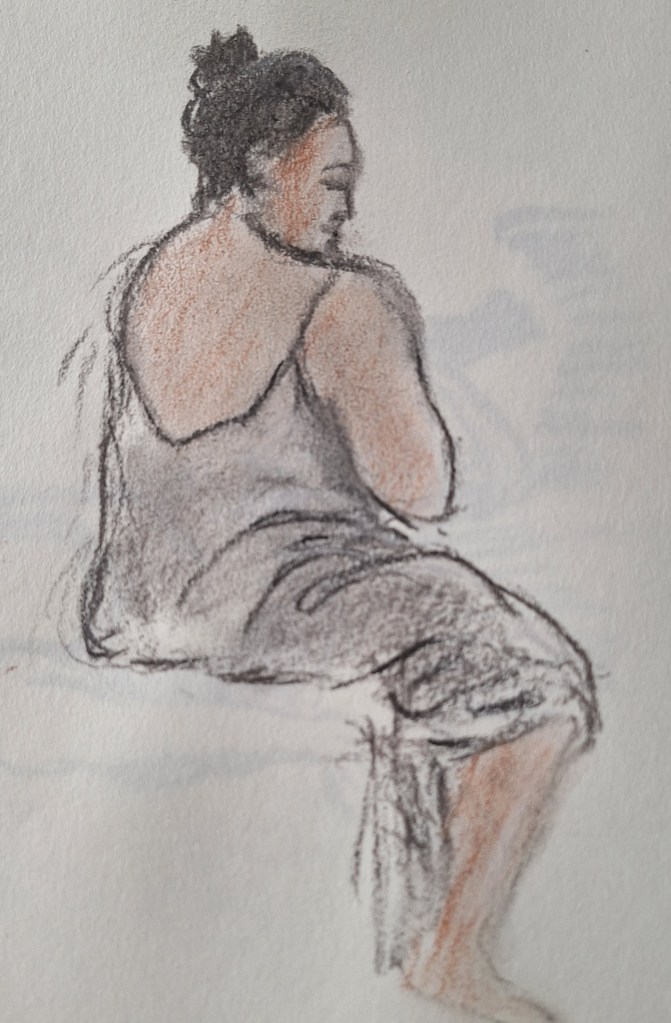
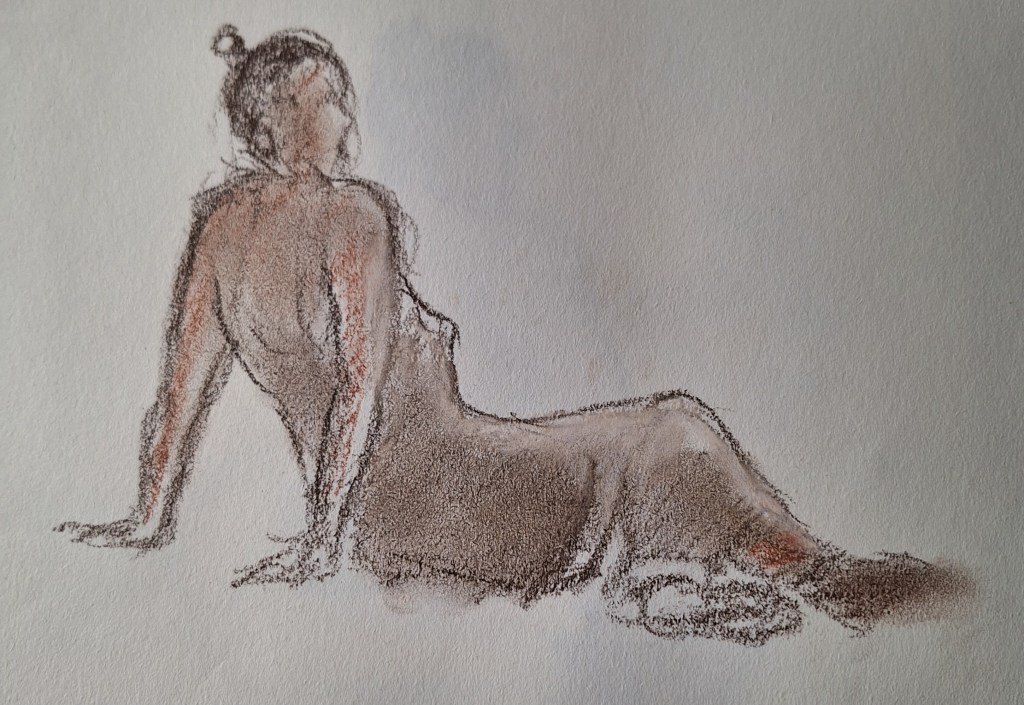
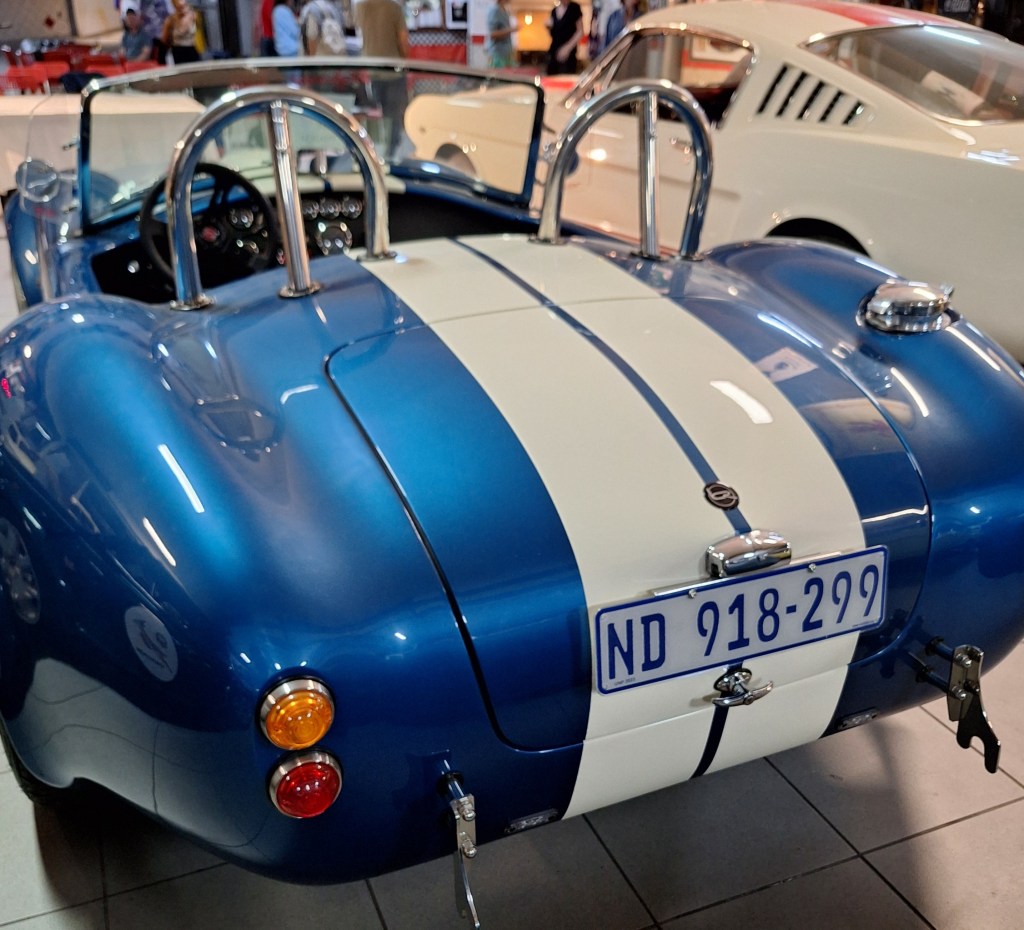
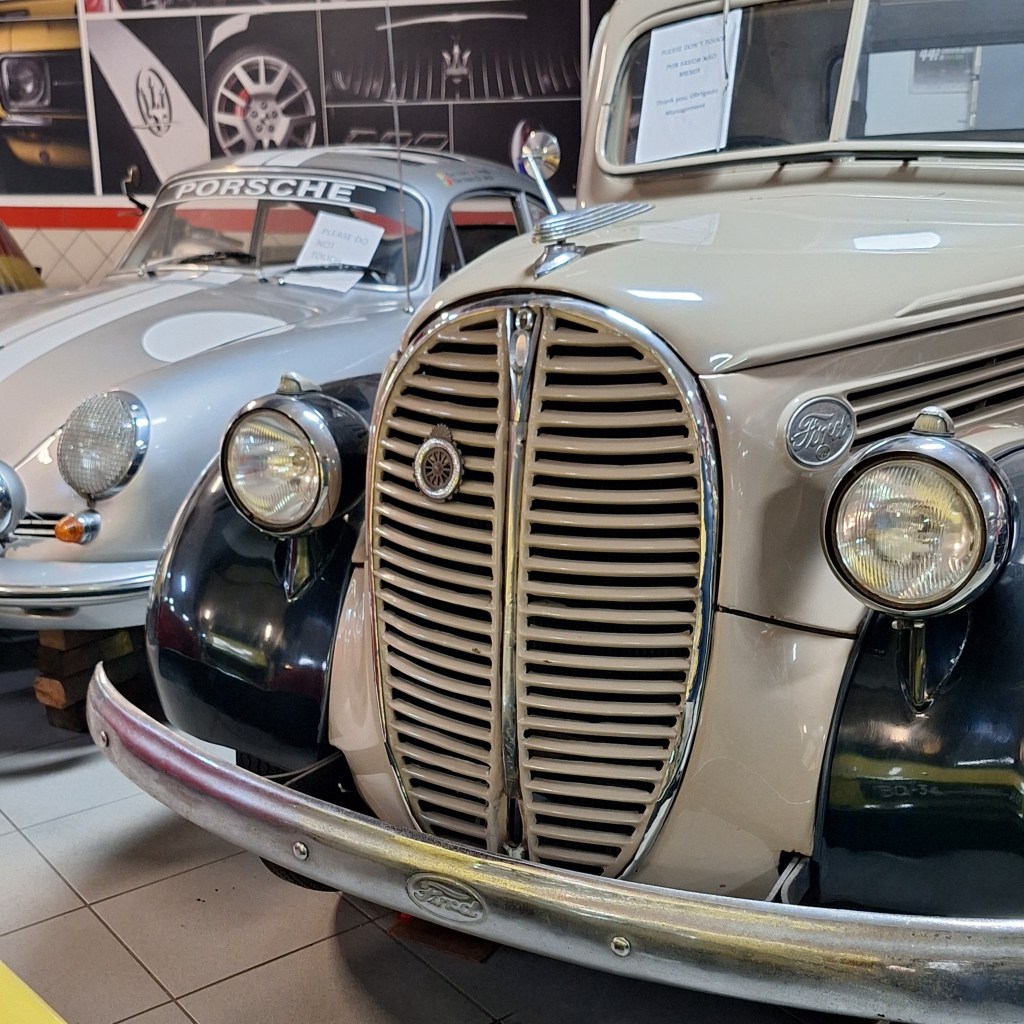
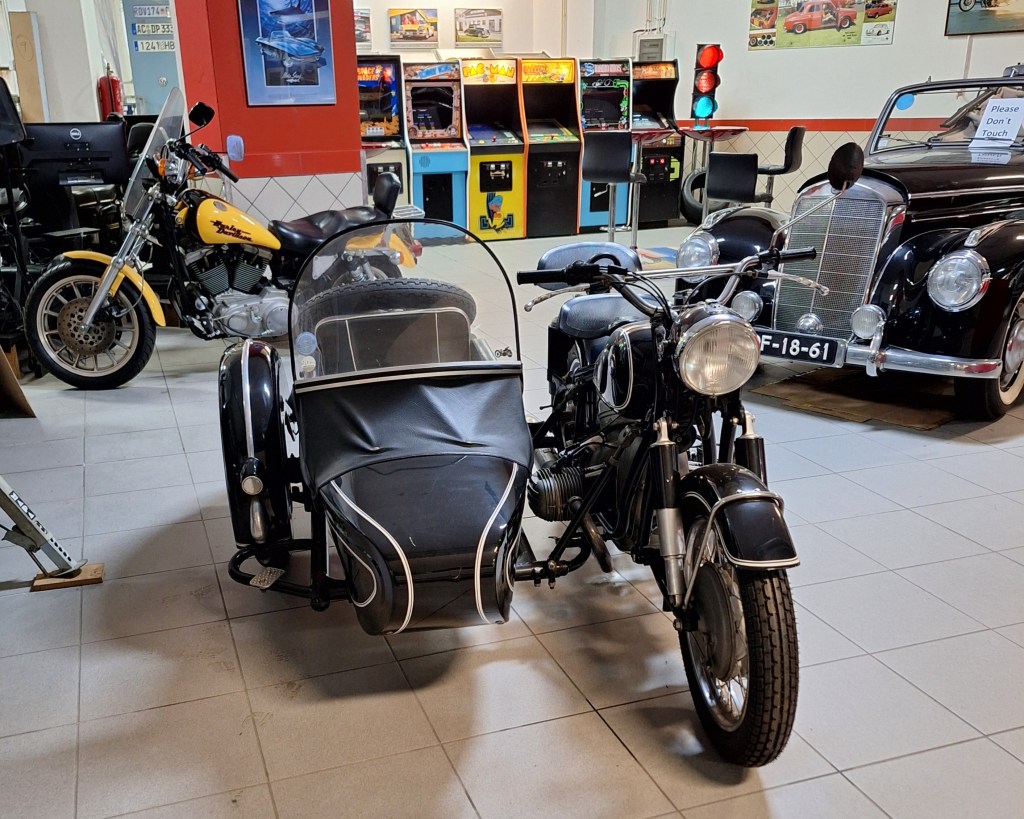
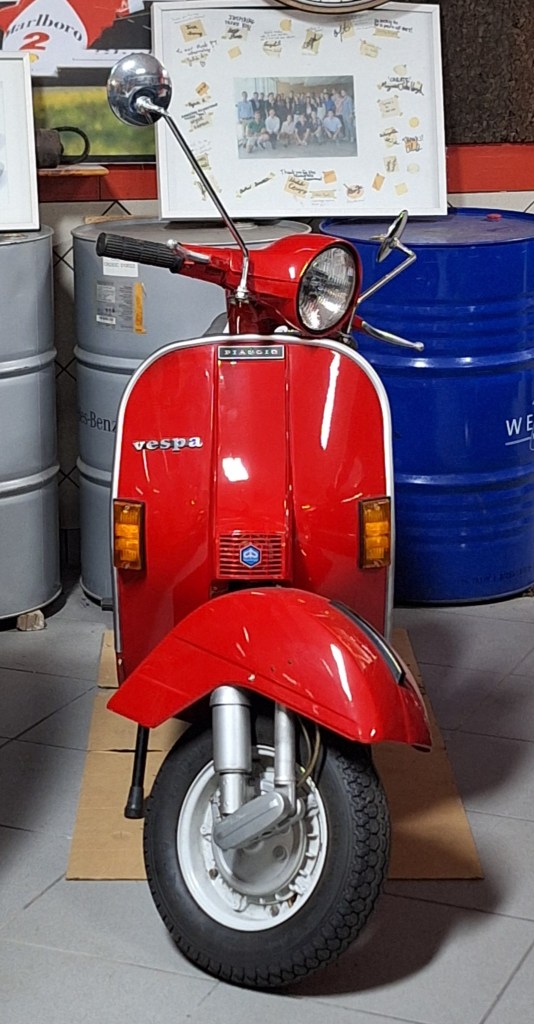
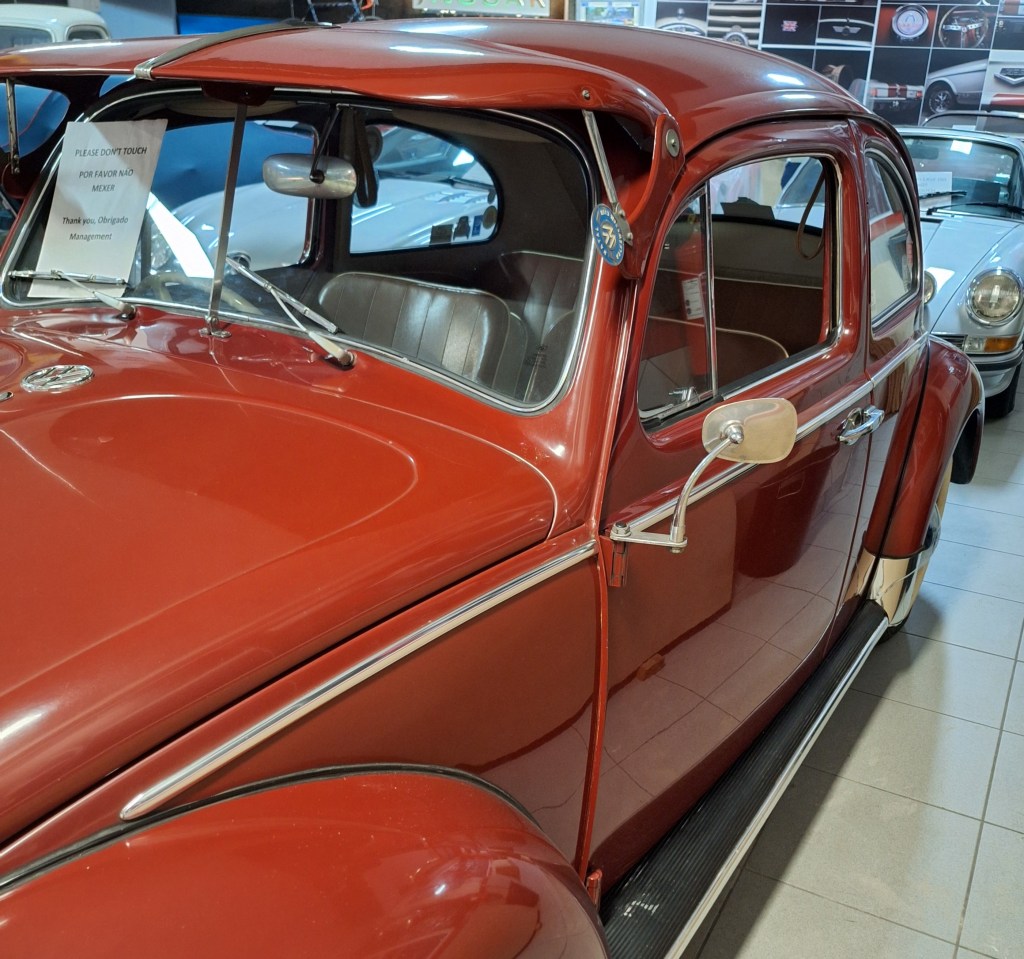
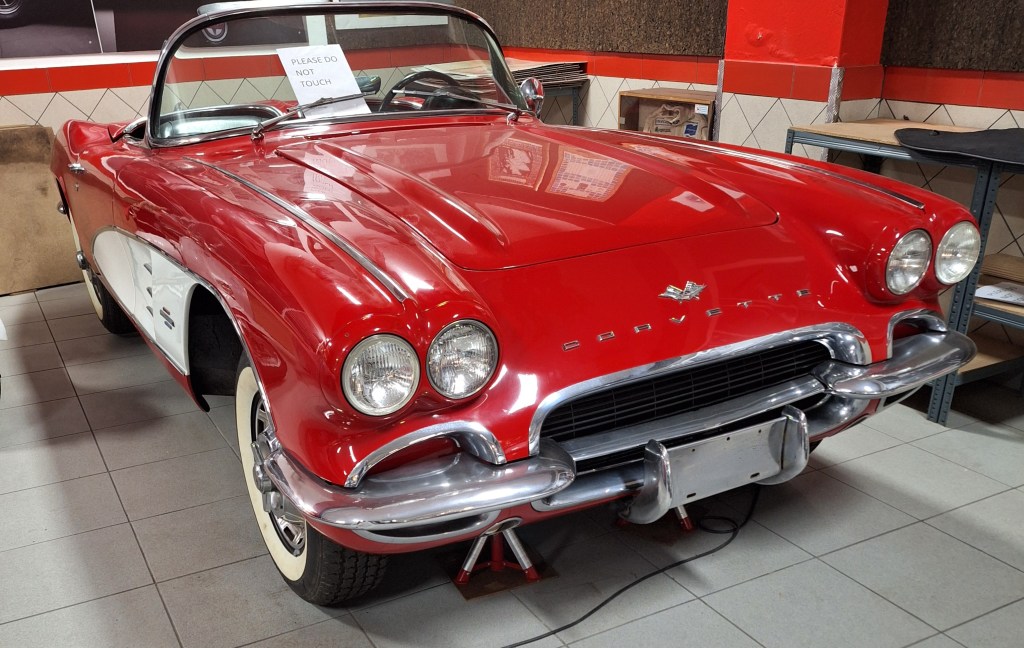
Yesterday my Drawing Club had a live model drawing session at “Tim’s Garage” where some wealthy car collectors store their toys.  Very well- kept cars, classical models, some rarities.  Motorbikes and scooters also.  I was allowed to take some snapshots of the cars before this very unnusual drawing session:  great contrast between the still model  and the some very fast cars.

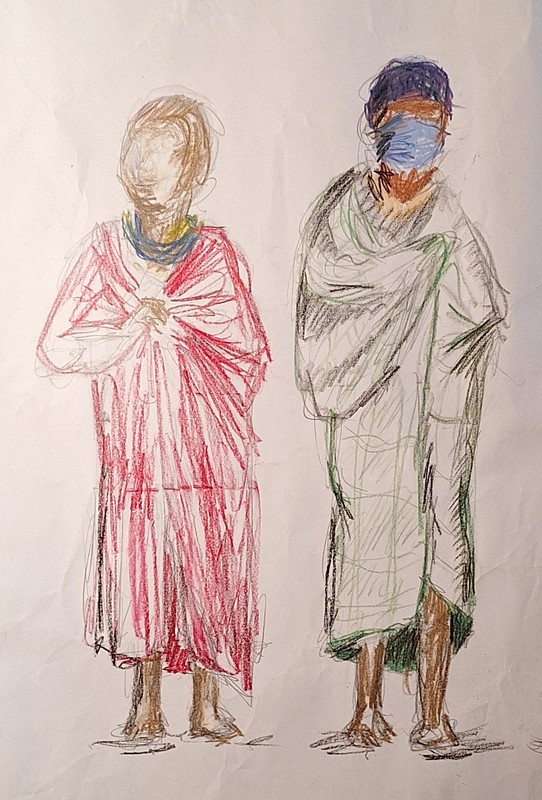
Sketches first

And now the snapshots of some cars

AC Cobra

Ford Mustang

And other cars and motorbikes
Contrasto

“Contrasto” is an anual event in my neighbourhood.  

It is promoted by an active group of neighbours, and promotes socializing through music (plenty of music) , small workshops, activities for children, art exhibitions, a market of home-made artisanal products, eating, drinking and dancing until 10pm.

There is an active participation of all the neighbours.

This year I had the idea of a “Get wings ! ” project.

 I made two pairs of wings and hanged them. People could be photographed in front of those wings – instant photos were taken with a “mini-Instax camera” and the subjects collected them by the end of the day. Different results, this camera is quite tricky and very sensitive to light variations, but the idea was appreciated and the participation exceeded my expectations.

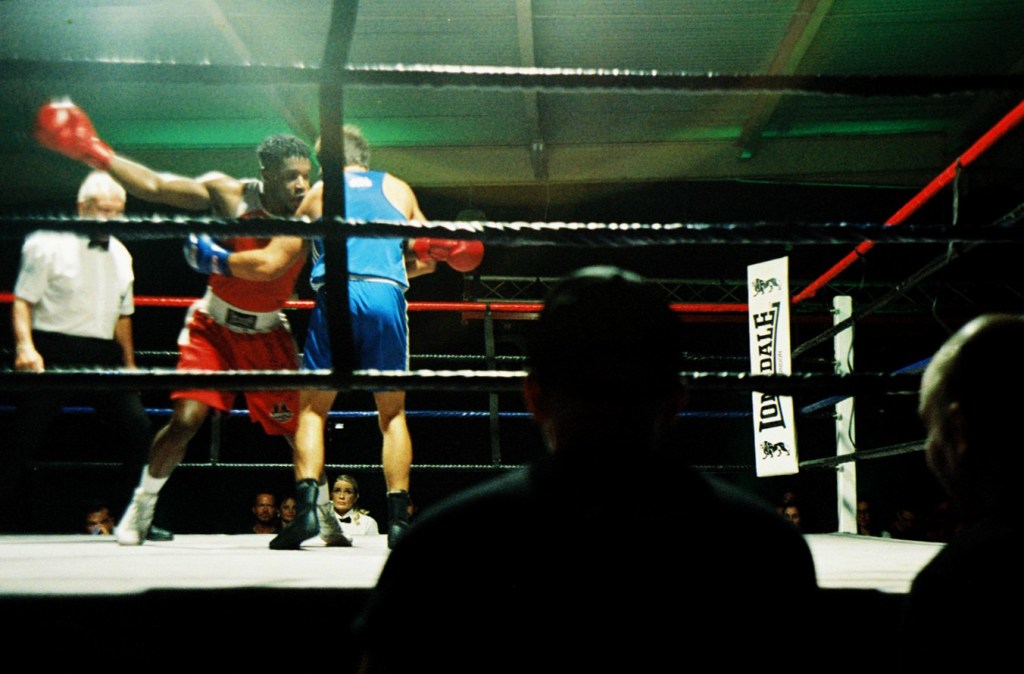
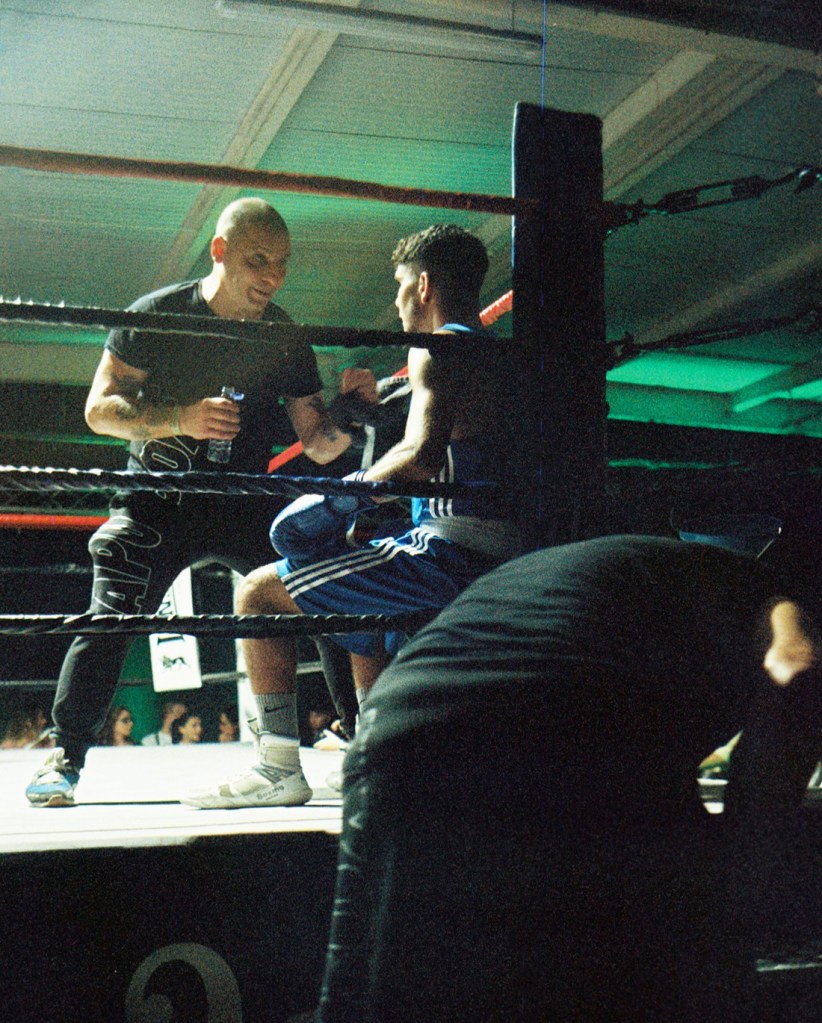
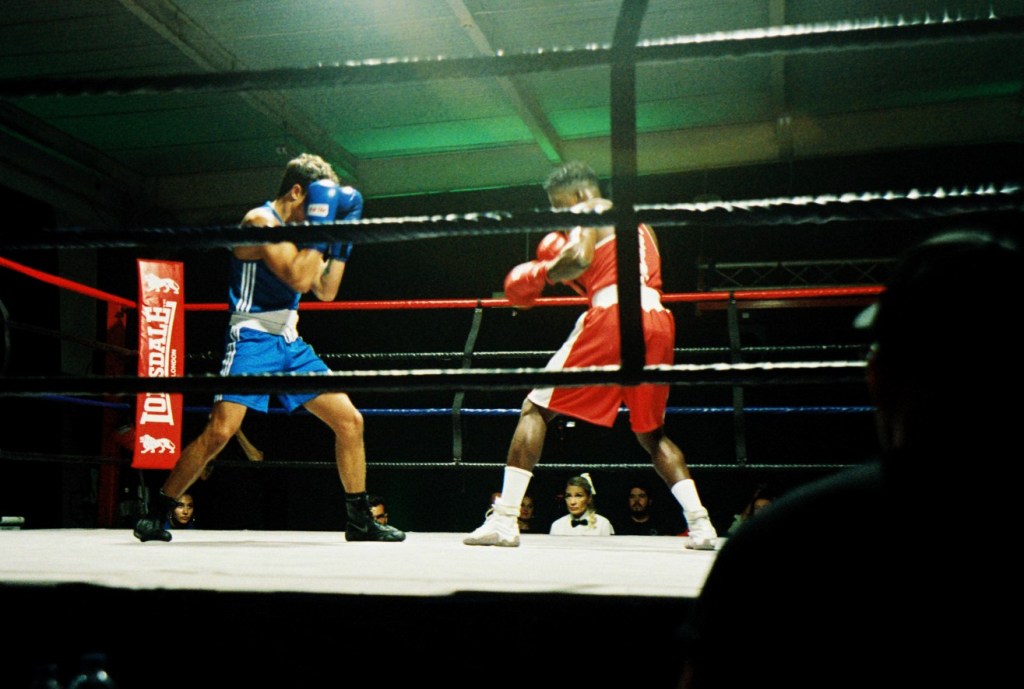
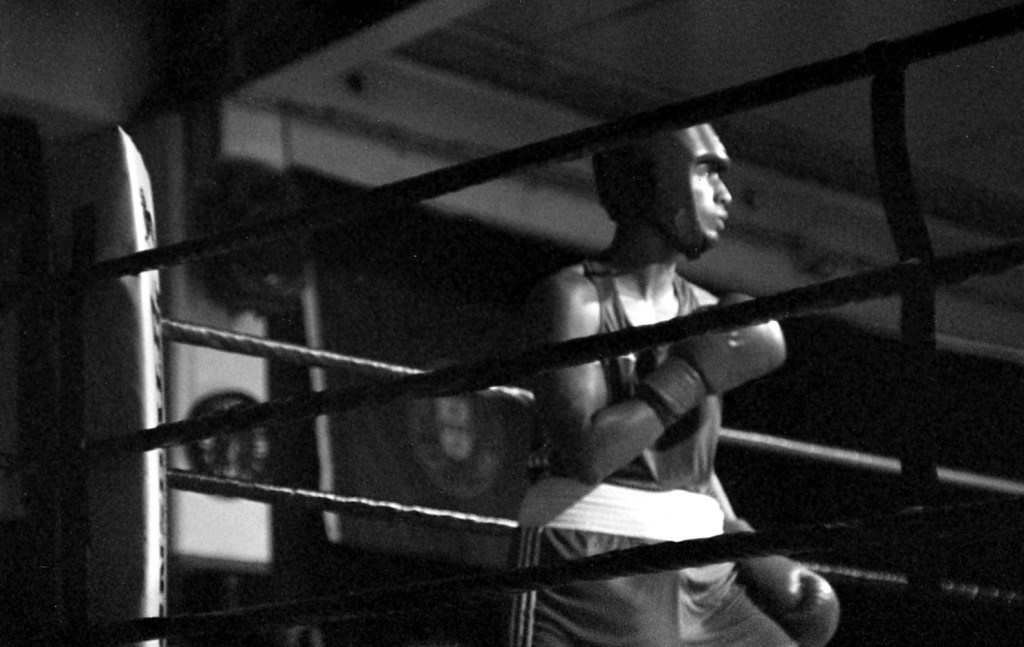
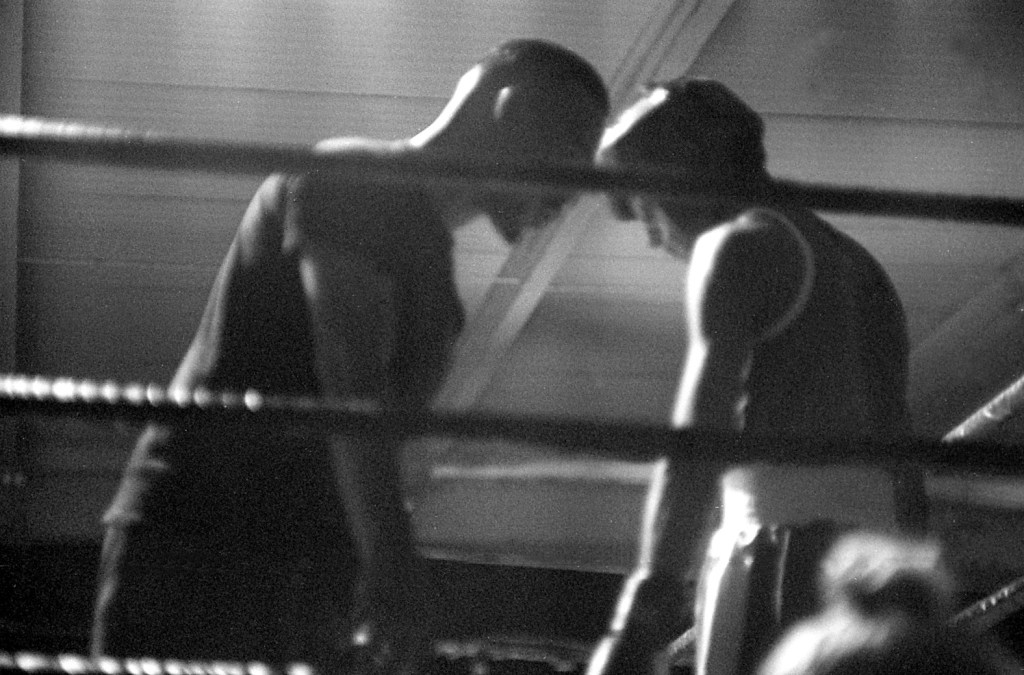
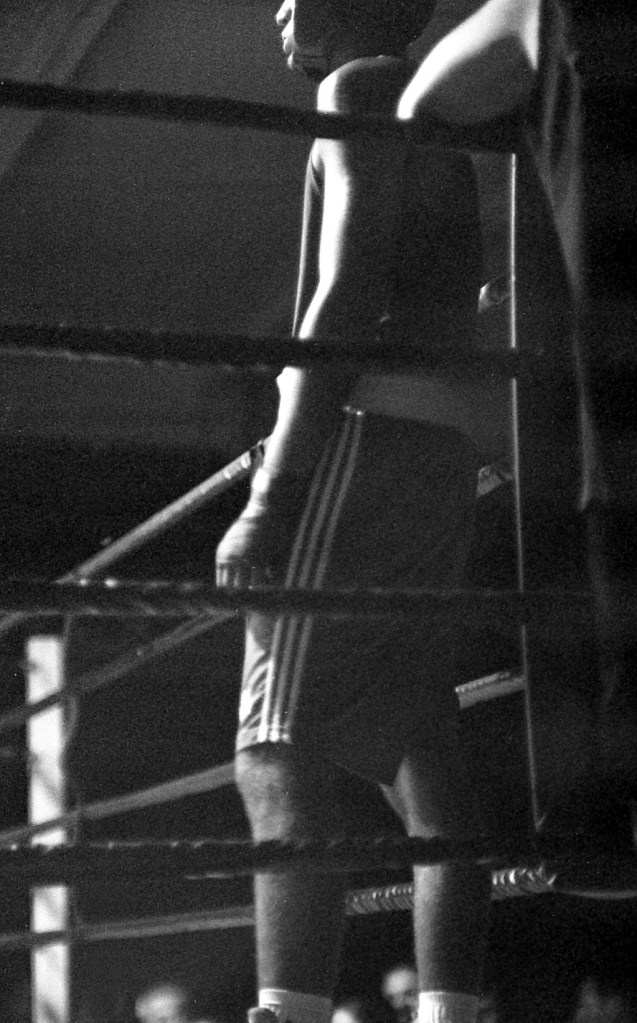
“Boxing Clash #2”, an amateur boxing match between Portuguese and Italian teams in a Gym near Lisbon, Lots of enthusiasm, some agressivity and violence to an acceptable level (no serious injuries, no bleedings). Not being a fan or an expert, it was an interesting experience to me. I was surprised by the high number of women watching the match – and by their vocal incentives to the fighters.

The days are numbered

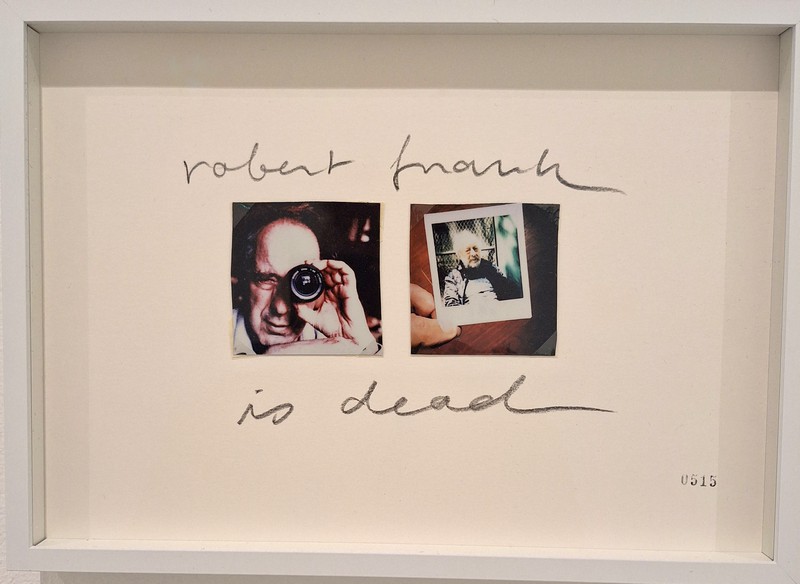
An  exhibition of photographs by Daniel Blaufuks at the Museum of Architecture Art and Technology (MAAT) in Lisbon. I selected two of many photos exposed. A few hundreds of small instax photos, isolated or paired, with hand-written, printed or glued captions.

From the introductory text by João Pinharanda :

“We created time and immediately felt hemmed in and devoured by it. Memory is a betrayal of time. We have always tried, without success, to escape it, to negate its erosive influence – a Sisyphean task in which Blaufuks, who exposes to the world the weight of the myriad epochs and memories (family, personal, historical, political, cultural, …) he carries, participates.

Some more information here https://maat.pt/en/event/daniel-blaufuks-days-are-numbered

Two new paintings

I have just finished two oil paintings. Two examples of too much imagination  – deserving a much better painting technique…

”The Acrobats” (oil on canvas) with three ascending figures coming from nowhere and pushing themselves upwards.

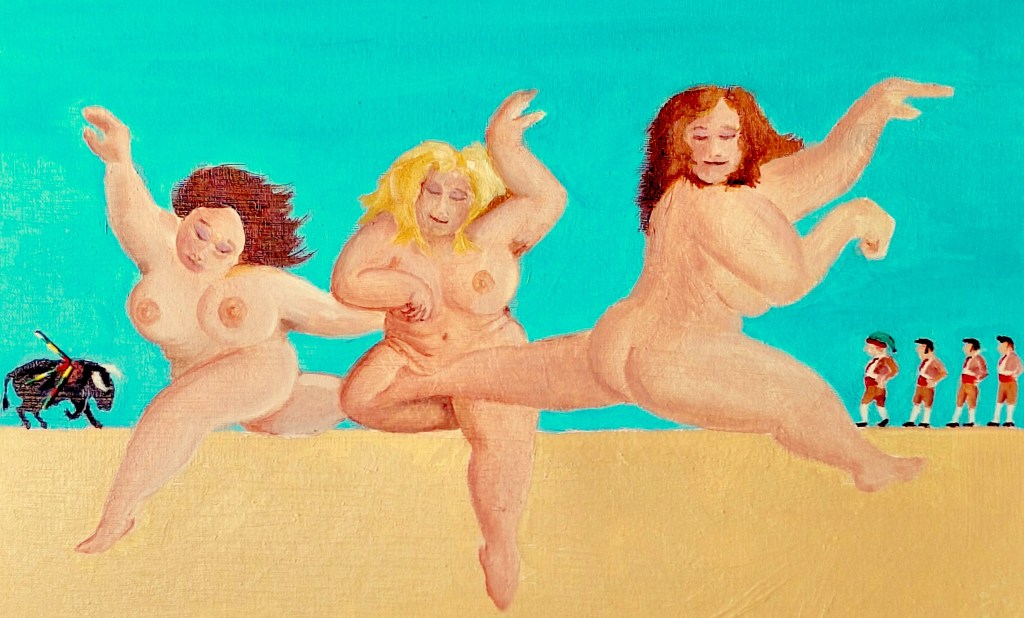
 And “Thaurokathapsia” (oil on plywood), a modern imaginary version of a lost Minoic art.

The Acrobats

Taurokathapsia

Time portals

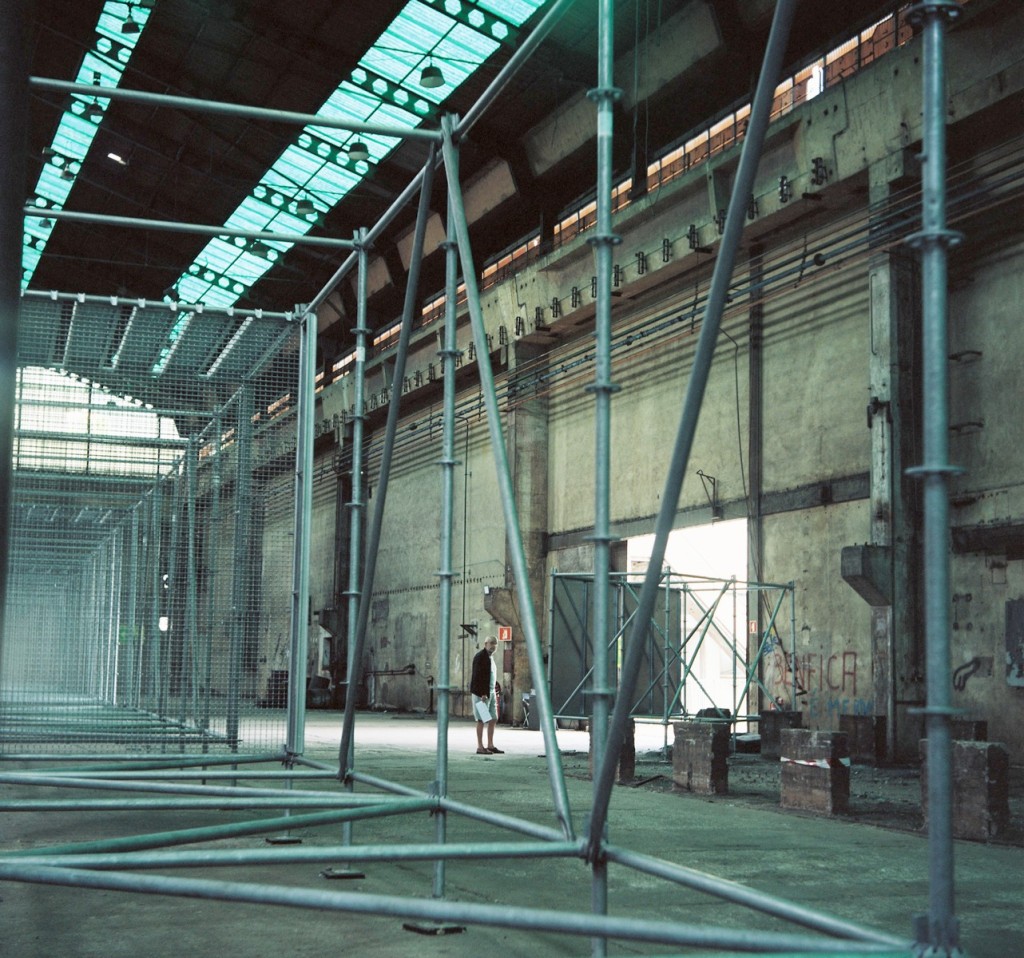
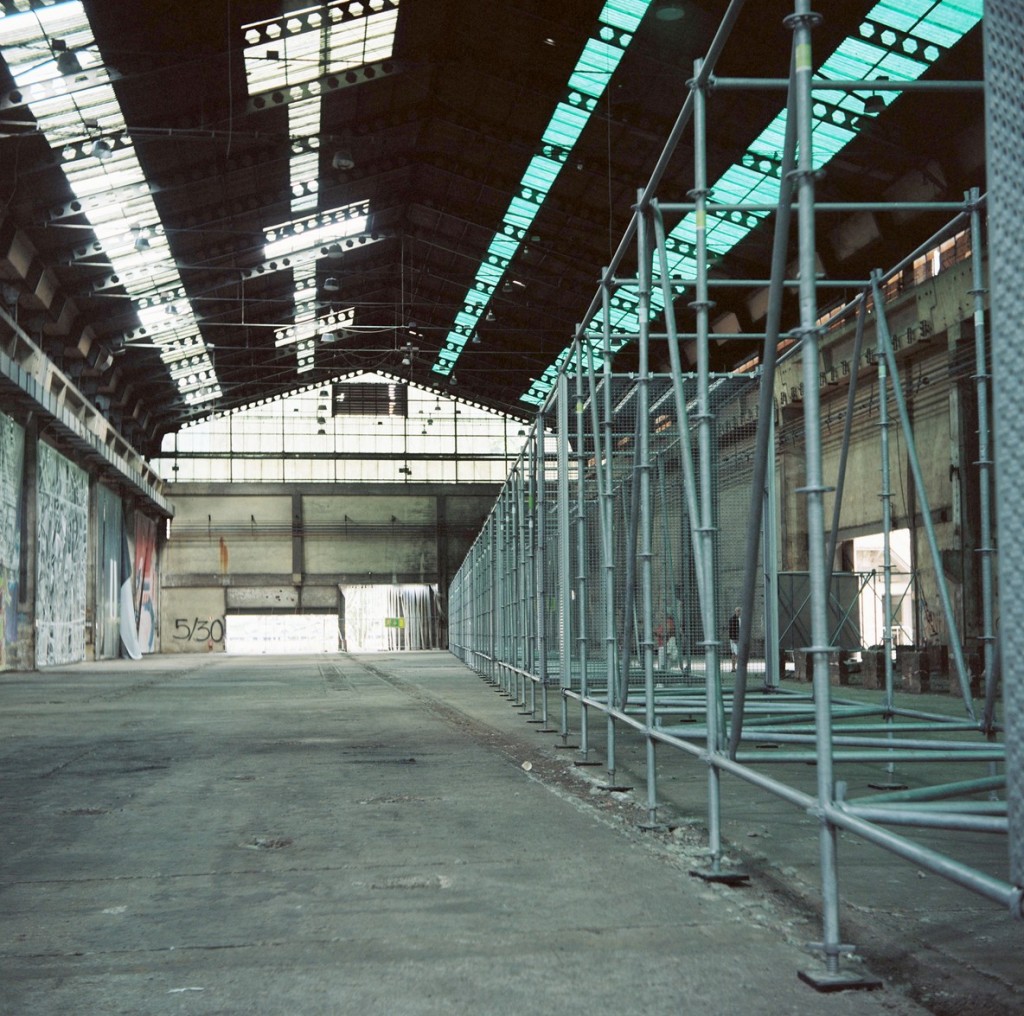
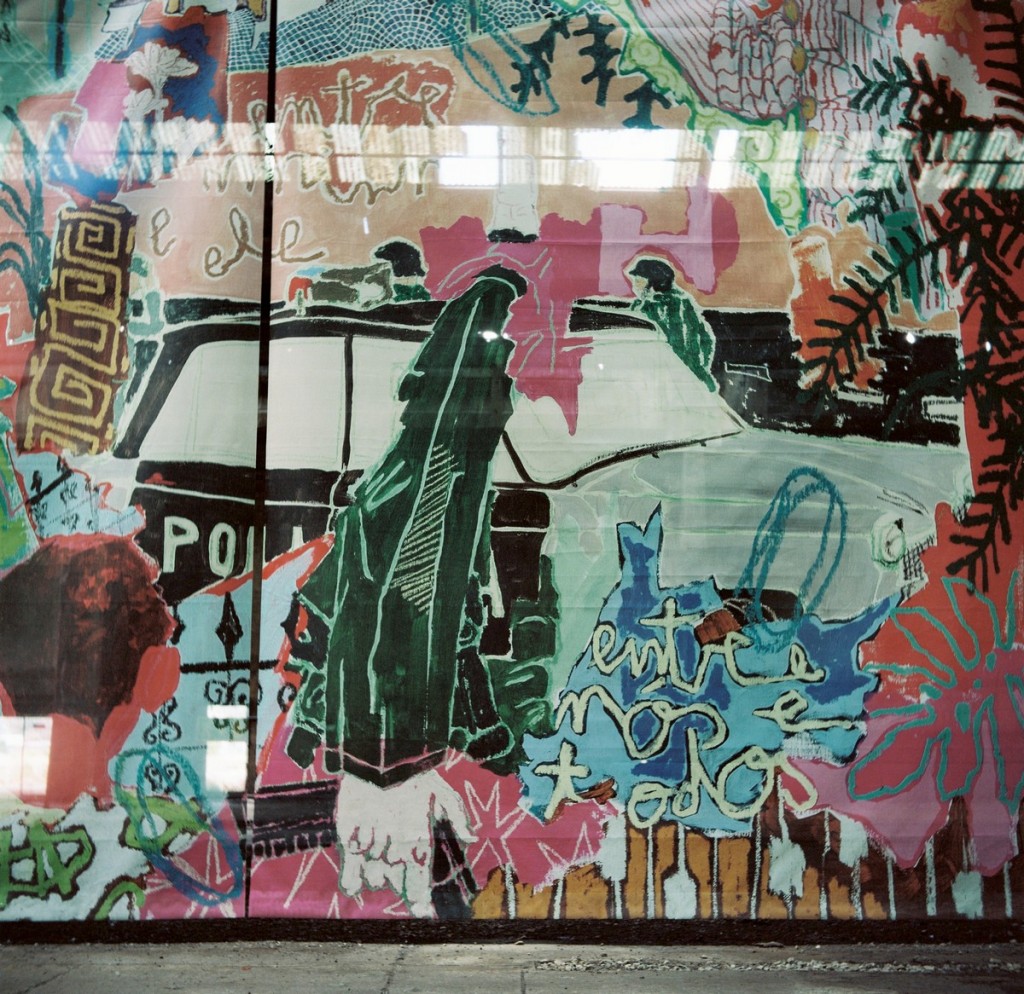
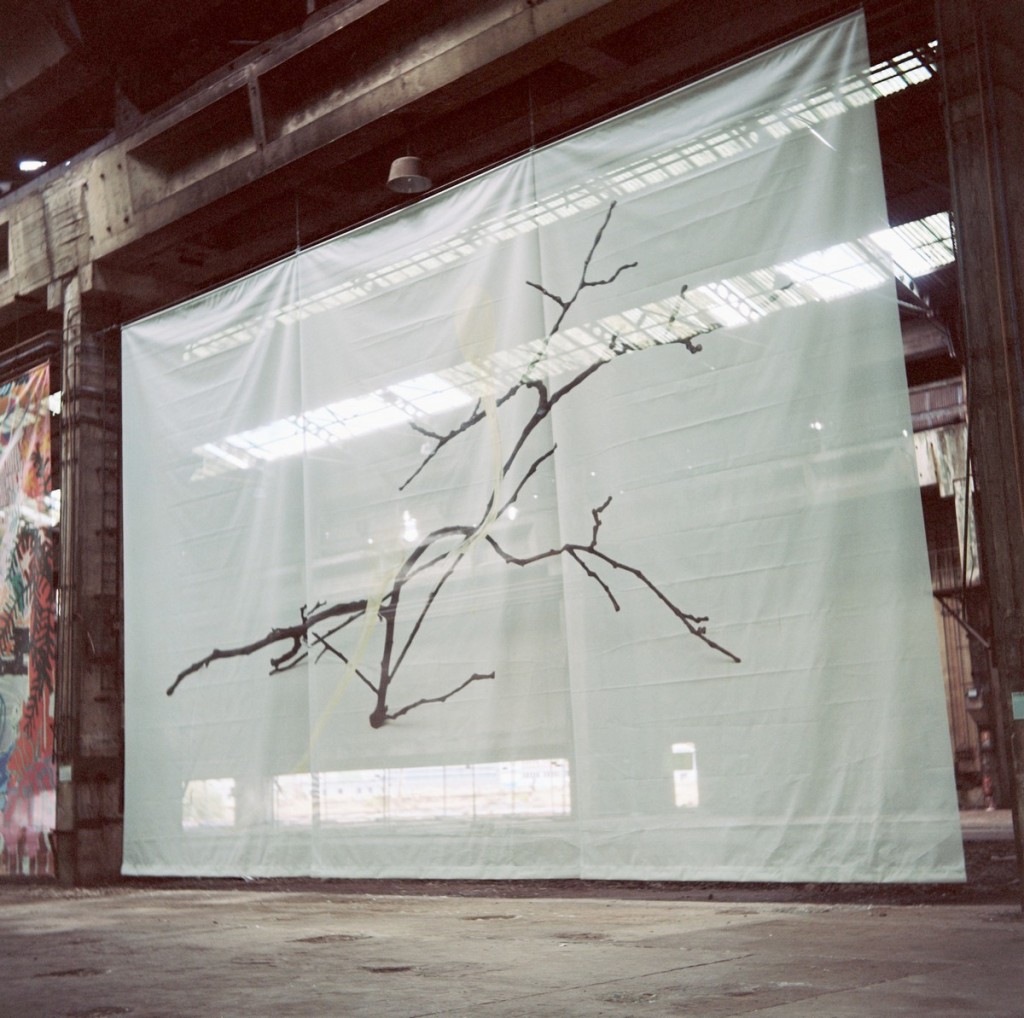
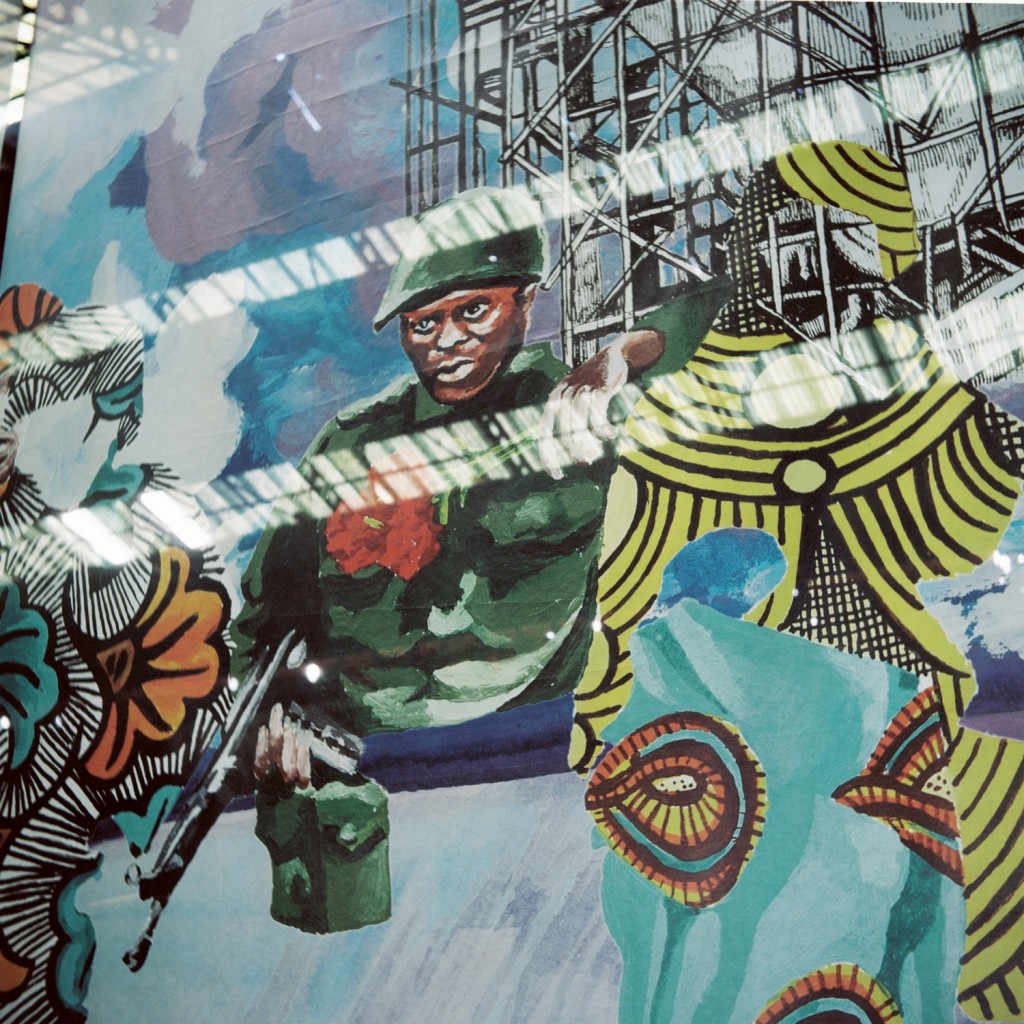
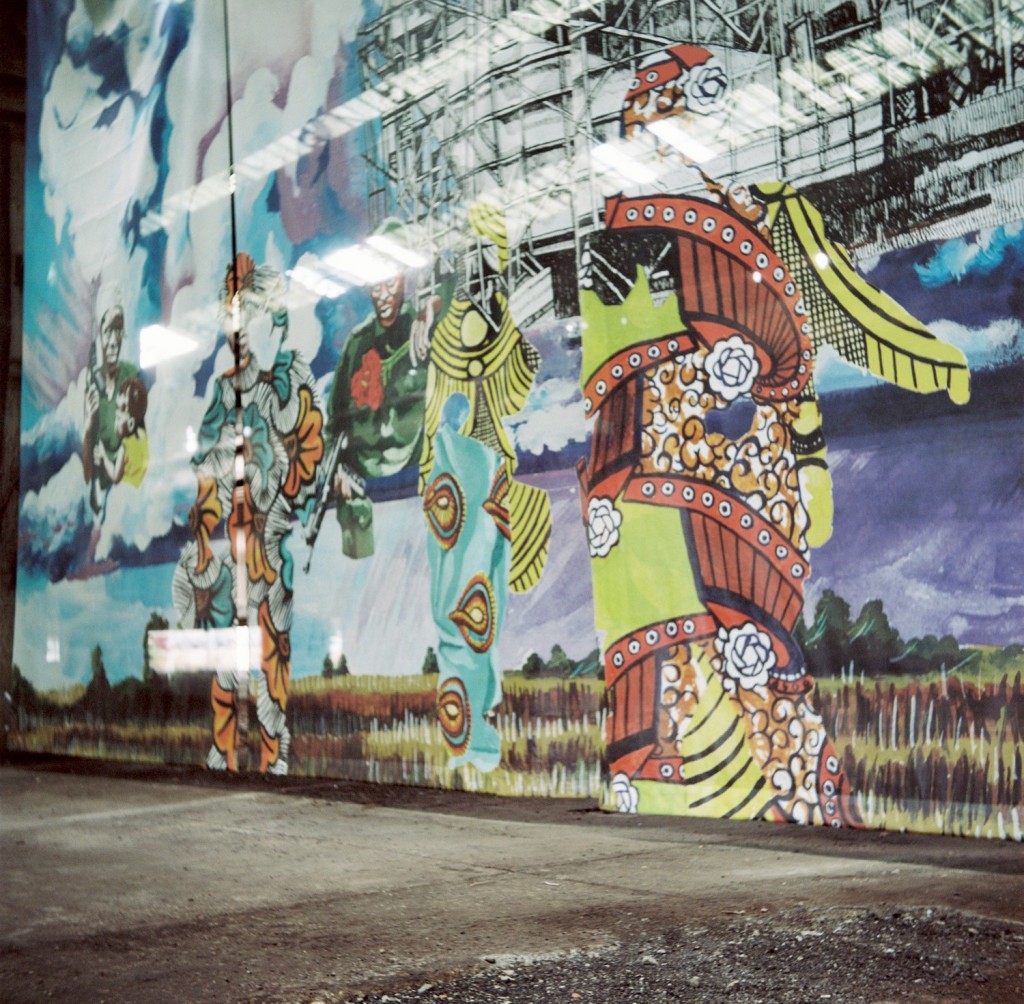
An exhibition commemorating the 50th anniversary of the April Revolution and the end of the colonial wars in Africa. Seven artists created images on very large semi-transparent canvases, installed in the abandoned buildings of the largest ship repair industry in the Lisbon area.

There is visible light from the roof windows coming in through the canvases.

Things as they are

From “The Man with the Blue Guitar” by Wallace Stevens (1879-1955), a fragment from part XIV.

“…A candle is enough to light the world,

It makes it clear. Even at noon
It glistens in essential dark.

At night, it lights the fruit and wine,

The book and bread, things as they are.”

For those interested, the complete Wallace Stevens poem inspired, in the seventies, the series of etchings “The Blue Guitar” by David Hockney – well worth to be seen.
Salt

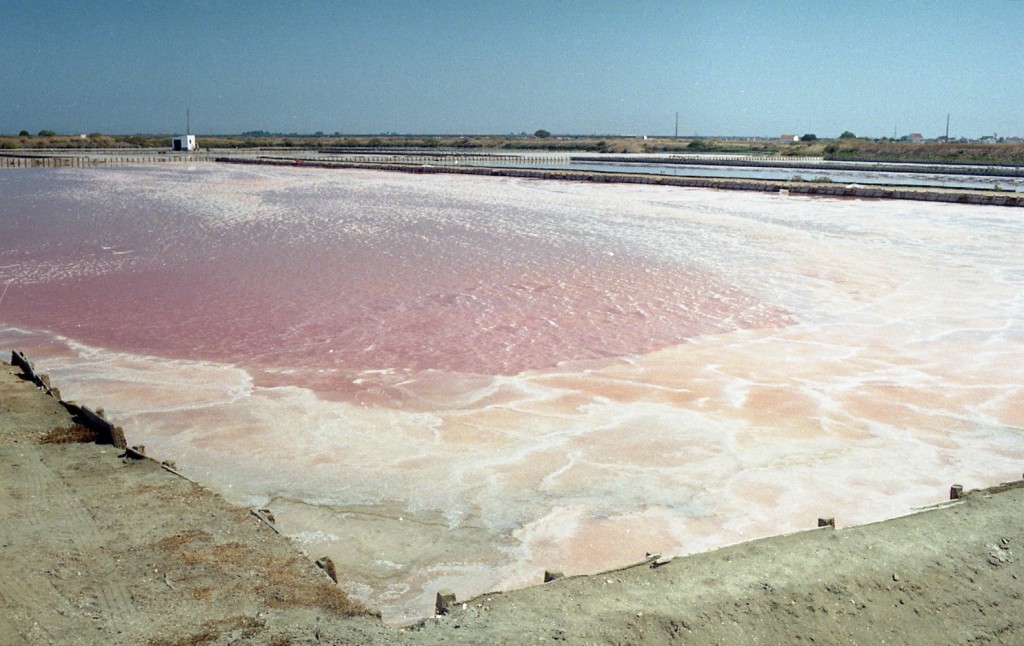
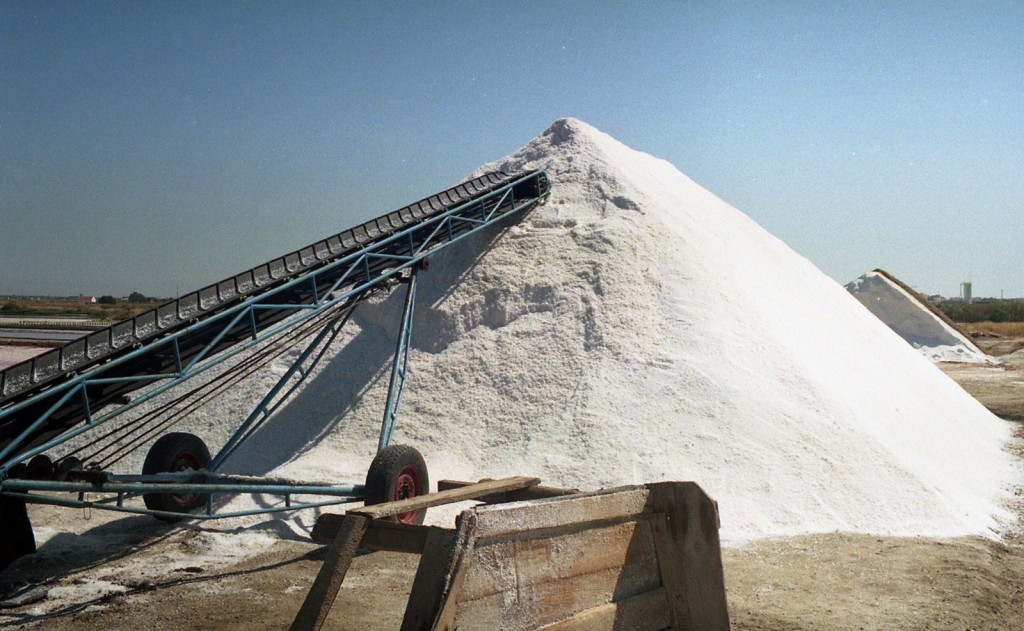
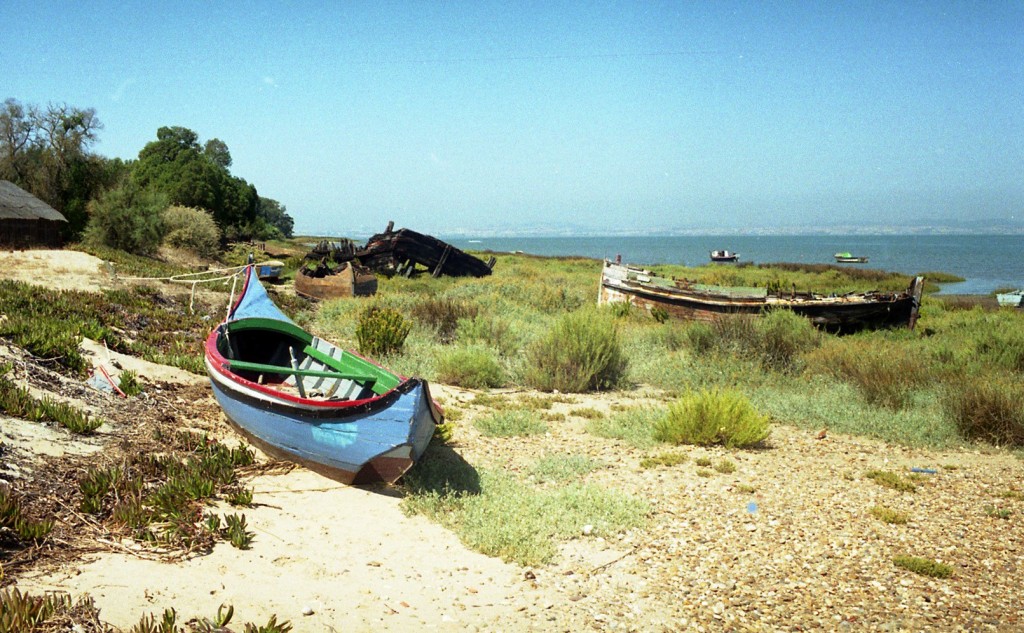
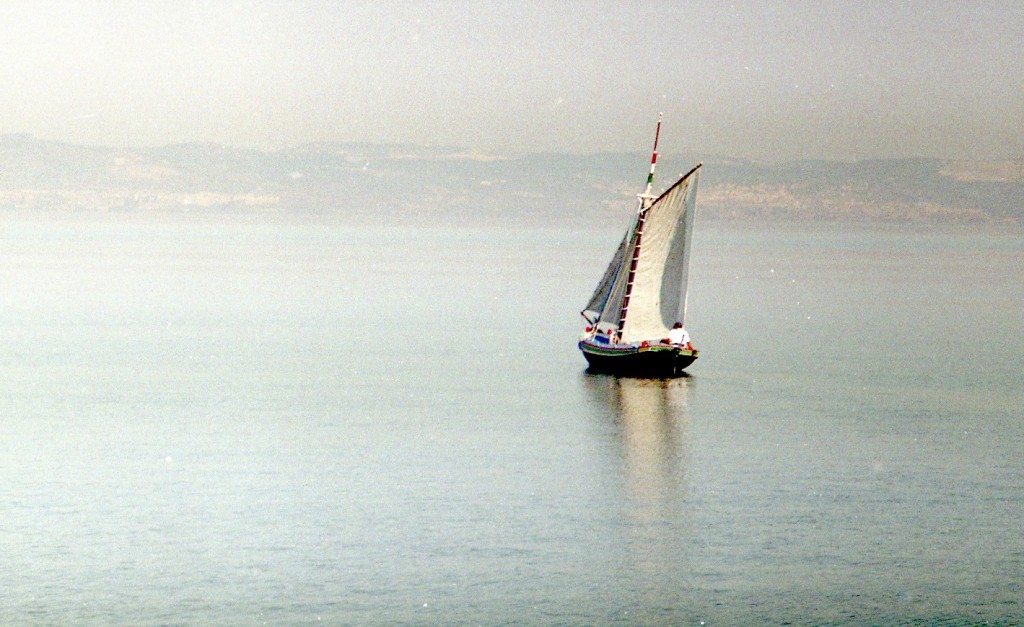
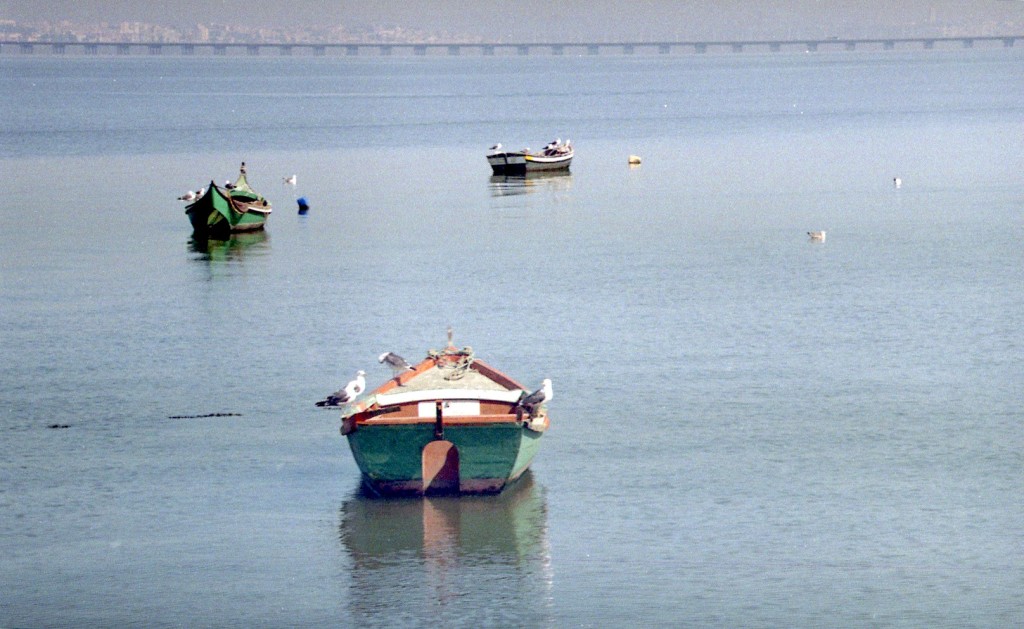
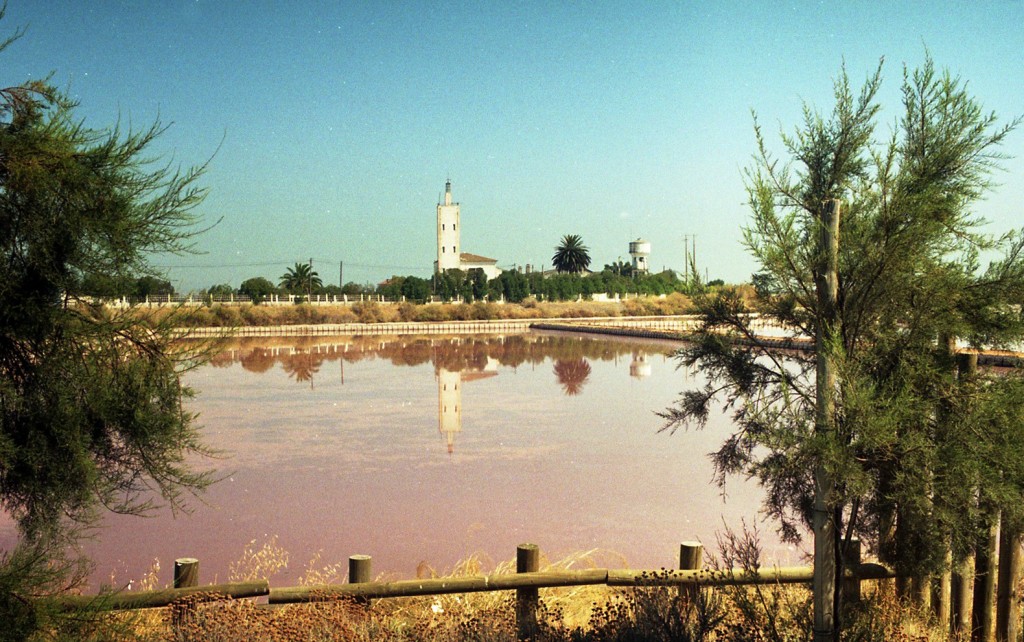
Reviewing some old negatives from more than 15 years ago, I found some images from the salt pans of the Tagus South bank.  They seemed abandoned then, probably they are now out of business. But old tools and machines were still there, and also the big salt mounts – as if the people working there had suddenly gone away. Some boats were on the river – and seagulls too, of course…

The new Book is out !!!

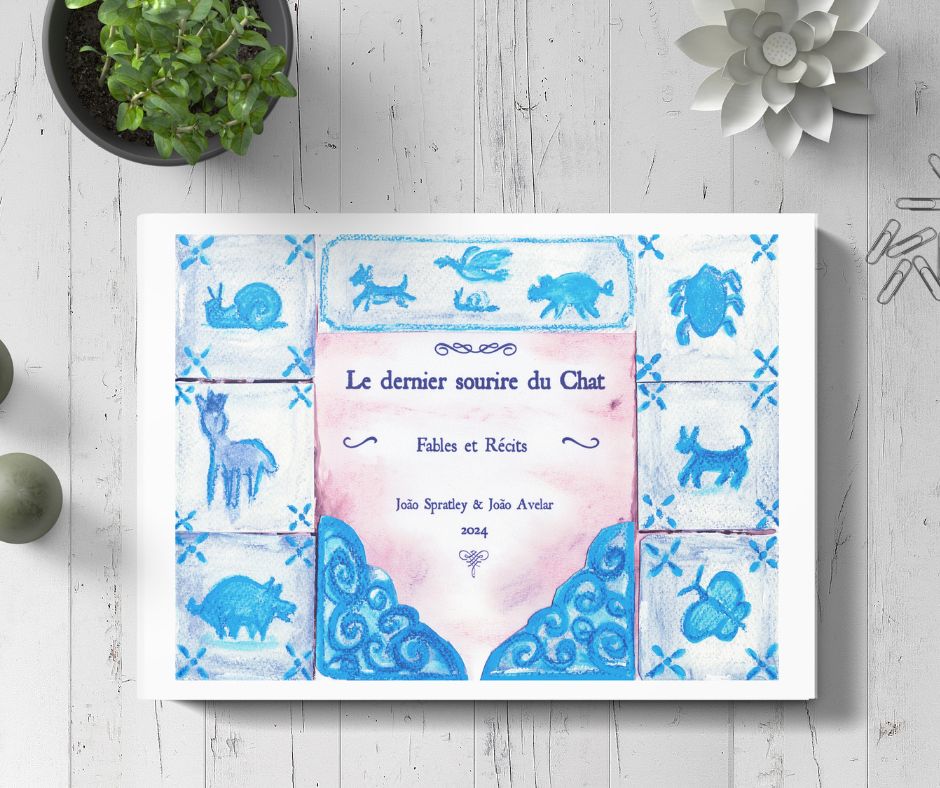
My long-time friend João Spratley is an excellent writer. He wrote a series of short texts in the form of traditional Fables, and asked me to illustrate them. This resulted in a short book, in French, that was published in 2021 (“Le Sourire du Chat et autres historiettes”). In the same line, we have just published a second (and last) book of Fables, also written in French (“Le Dernier sourire du Chat”), and also illustrated by me. I created a page Books im my main menu joaoavelarnet.org/books/ where you can find more details

Pastoral

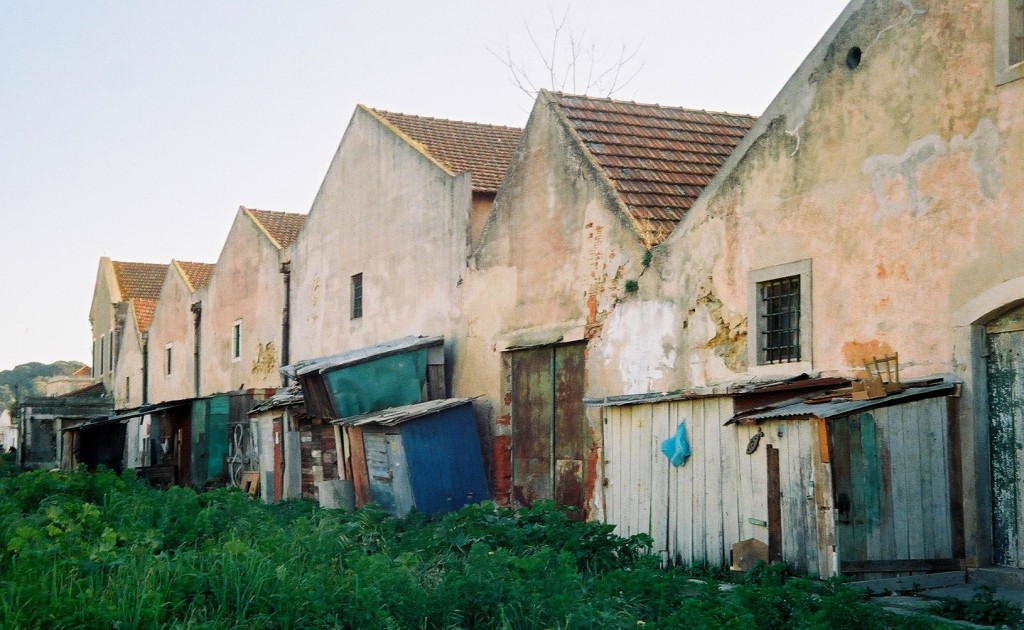
Reviewing my old photos, I found one that matches a well-known poem by William Carlos Williams

Pastoral

by William Carlos Williams

When I was younger
it was plain to me
I must make something of myself.
Older now
I walk back streets
admiring the houses
of the very poor:
roof out of line with sides
the yards cluttered
with old chicken wire, ashes,
furniture gone wrong;
the fences and outhouses
built of barrel staves
and parts of boxes, all,
if I am fortunate,
smeared a bluish green
that properly weathered
pleases me best of all colors.
No one
will believe this
of vast import to the nation.

from The Collected Poems of W.C. Williams, New Directions

Adufeira

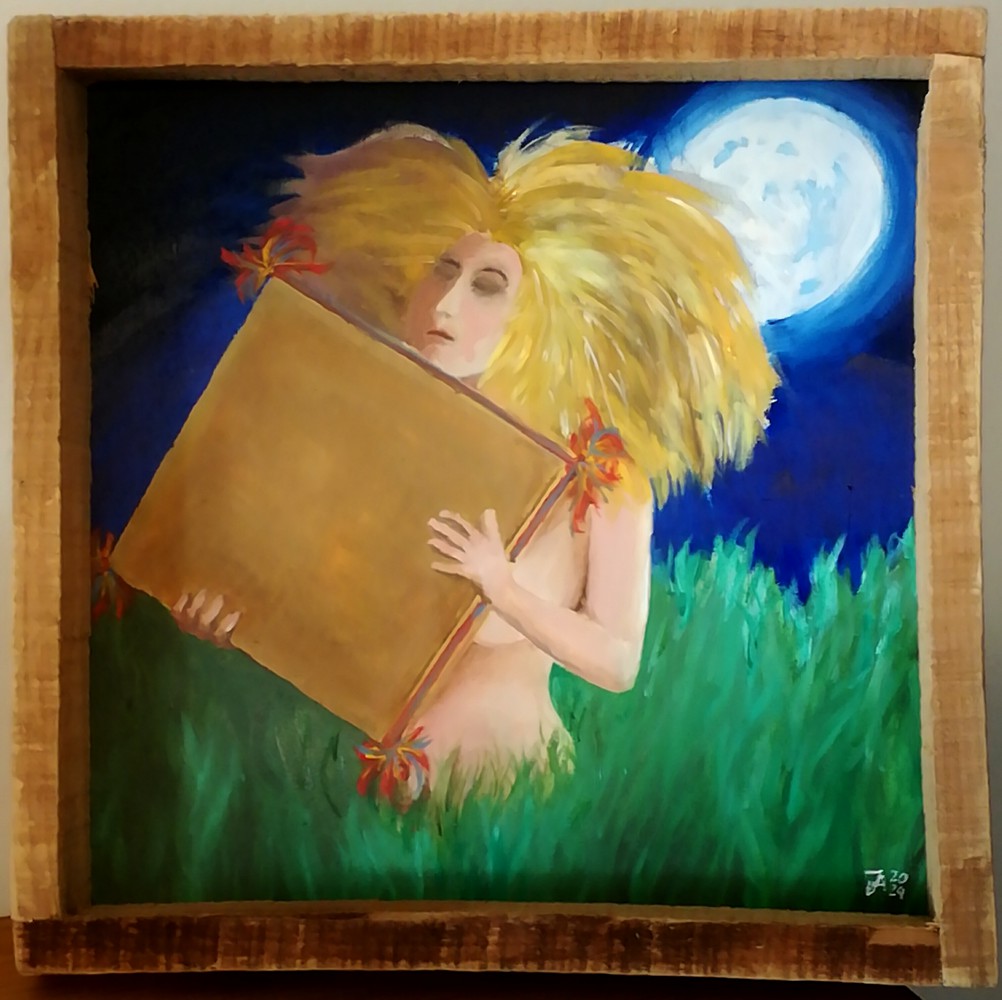
The Adufe is a square-shaped membranophone, introduced to Portugal by the Arabs in the 8th and 9th centuries. It has a square wooden structure and is covered on both sides with tanned goatskin. Traditionally one of the faces is that of a male animal, the other that of a female animal (some say it sounds better that way !). In the corners there are decorations with colored ribbons.

It is played in a vertical position and struck with the fingers and hands. Inside there are grains, seeds or small stones that make  a rattling noise when shaking the Adufe. It is an instrument usually played by women (“adufeiras”) and has a strong presence in the interior of central Portugal.

https://en.wikipedia.org/wiki/Adufe

I used the old and very rough wooden structure of a small-sized adufe as a frame for a small painting (oil on plywood), as a memory of its origin.